
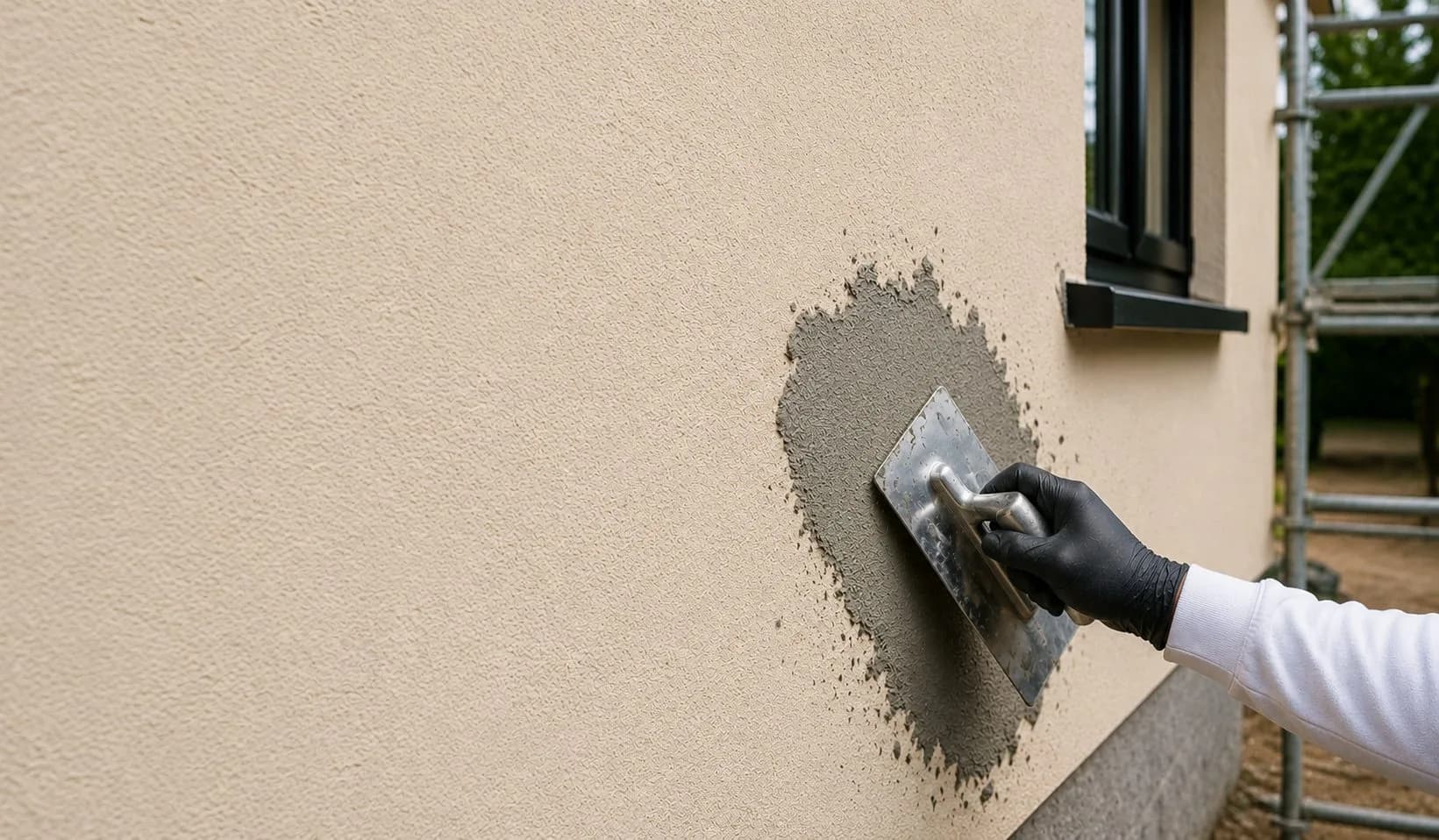
Blown Render Repair in Driffield
Blown render — sections of render that have lost adhesion to the substrate and produce a hollow sound when tapped — is the result of moisture getting behind the render and expanding through freeze-thaw cycles, or of inadequate substrate preparation when the render was originally applied.
- Free Survey & QuoteNo obligation — confirmed within one working day
- 17+ Years ExperienceTrusted across Yorkshire since 2009
- Fully InsuredPublic liability & workmanship cover on every job
- Manufacturer AccreditedApproved installer — warranty-valid on every system
Blown Render Repair — what you need to know
Blown render — sections of render that have lost adhesion to the substrate and produce a hollow sound when tapped — is the result of moisture getting behind the render and expanding through freeze-thaw cycles, or of inadequate substrate preparation when the render was originally applied. Blown render must be cut out and replaced; it will not re-adhere by itself, and leaving it in place allows water to accumulate behind the render shell and continue damaging the masonry beneath. The repair process requires cutting back to sound render, preparing the substrate, and applying compatible repair mortar in layers.
Solid-walled Victorian properties in Driffield rely on external render for weather protection — silicone render re-renders are chosen for durability and self-cleaning performance on properties in this active East Riding market town.
Free · No Obligation
Get a quote for Blown Render Repair in Driffield
We visit your property, assess the work and give you a fixed written quote. No call centres, no pressure, no hidden charges.
Request Free SurveyOr call +447774708801Common situations we resolve
Areas that sound hollow when tapped, indicating the render has lost adhesion to the wall behind
Sections of render visibly bulging or separating from the substrate
Large areas of blow after a freeze event following water ingress
Hollow sections discovered during or after a building survey
Solid brick Victorian elevations where successive winters of freeze-thaw have blown increasingly large sections
Property considerations in Driffield
Driffield, known as the Capital of the Yorkshire Wolds, is an East Riding market town with a predominantly Victorian brick-built character in its town centre and on the older residential streets. The housing stock includes Victorian terraces and semi-detached properties near the market place, interwar development in the suburbs, and modern residential estates on the periphery. The Driffield Navigation, a canal connecting to the River Hull, runs through the town. The surrounding Wolds landscape is gentle and rolling.
Driffield's Yorkshire Wolds position means consistent East Yorkshire rainfall — the relatively open Wolds landscape means properties on exposed aspects face adequate wind-driven rain loading relevant to external render maintenance.
Driffield & surrounding areas
Our approach
Extent mapping
We tap-test the affected area systematically to map the full extent of the blow — blown areas often extend further than the visible surface cracks suggest. We also assess the adjacent render to determine whether further blow is likely to develop.
Cutting out
The blown render is cut back to sound material, undercutting the edge where possible to provide a better mechanical key for the repair. The substrate behind is cleaned and assessed — any masonry damage is repaired before re-rendering.
Substrate drying
If the wall behind is wet or damp, adequate drying time is allowed before the repair render is applied. Applying render to a wet substrate is a primary cause of subsequent blow, so this step is not skipped.
Repair render application
Repair mortar is applied in layers matching the original render depth. The repair is built up from a bonding coat to a floating coat to a finish coat, matching the existing render texture and profile as closely as possible.
What determines the cost
We provide fixed written quotes — what you are quoted is what you pay. The factors below determine where your project sits within the range for this type of work.
- Area of blown render to be cut out and replaced
- Depth of blow — full-thickness failures take more material and time to repair
- Whether scaffolding is needed for access
- Investigation and remediation of the water entry point — identifying and sealing the source as part of the repair to prevent recurrence
- Wall drying time required before re-rendering can proceed where moisture has penetrated the masonry
The most accurate way to understand the cost for your specific property is a free on-site survey. We assess the substrate, take measurements and provide a full itemised written quote.
Why homeowners in Driffield choose us
- One team throughout — no subcontractingThe same experienced team that surveys your property carries out the work and completes the final inspection — clear accountability from first visit to handover.
- Free survey, no obligationWe visit your property, assess the substrate, take measurements and provide a written quote with an honest recommendation. No pressure to proceed.
- Specialists — rendering and plastering is all we doOur specialism means better system knowledge, more careful application, and finishes that perform as the manufacturer intended.
Related services in Driffield
Blown Render Repair in nearby areas
Common questions
How do we know if render has blown?
Tap the surface with your knuckles or a small hammer. Sound render produces a solid thud; blown render produces a hollow, drum-like sound. The hollow area is usually larger than the visible cracked or damaged surface suggests. If you find one blown area, check adjacent sections — blow often spreads as water continues to enter behind the render.
Can blown render be treated without cutting it out?
No. Blown render has lost adhesion and will not re-adhere by itself. The only correct repair is to cut it out back to sound render and re-apply. Injecting adhesive into blown voids is not a reliable repair and is not something we recommend.
How can we prevent further blow in the future?
Ensuring the render system has no open cracks or poorly detailed junctions is the most effective prevention. Regular inspection after winter and sealing any hairline cracks before they allow water behind the render is the key maintenance task. Where the existing render has repeatedly blown, replacing it with a new correctly specified system with full mesh reinforcement is usually the better long-term investment.
Does blown render need repairing urgently?
A blown section that exposes bare masonry or has an open surface should be attended to before prolonged wet weather gets behind it. Water penetrating exposed masonry softens the surface and, in cold conditions, freeze-thaw cycles will extend the blown area to adjacent sections. Where the blow is concealed behind an intact surface — hollow when tapped but not yet open — the risk is lower but the repair should still be completed before the next winter season.
Useful guides for blown render repair in Driffield

Ready to transform your property?
Get a free, no-obligation quote from Yorkshire's premium rendering and insulation specialists. We typically reply within one working day.