
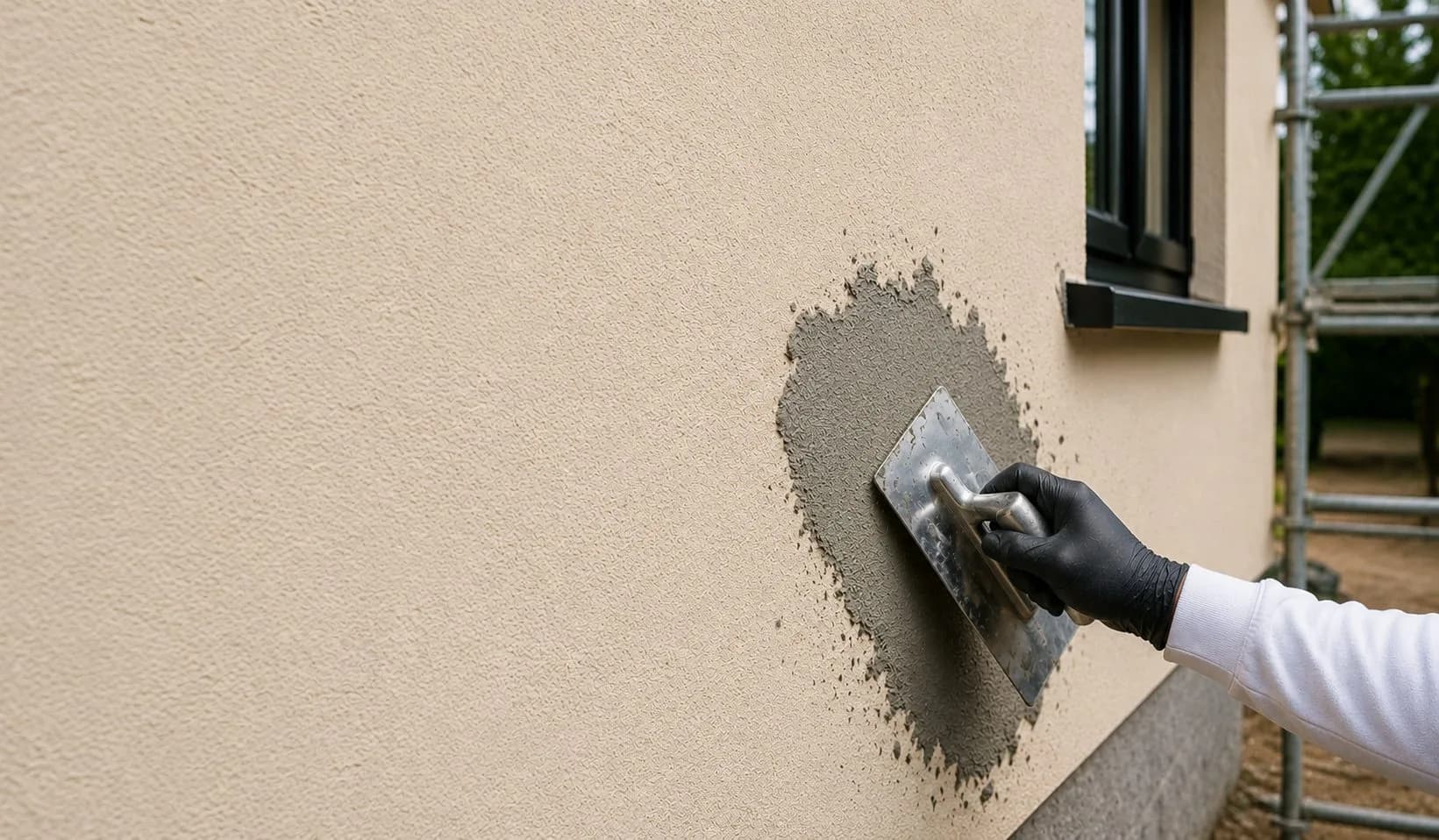
Plastering in Driffield
Plastering covers a wide range of interior and exterior finishing work — from full room re-plasters and skim coats over existing surfaces to patch repairs, floating and setting, and lime plaster work on period properties.
- Free Survey & QuoteNo obligation — confirmed within one working day
- 17+ Years ExperienceTrusted across Yorkshire since 2009
- Fully InsuredPublic liability & workmanship cover on every job
- Manufacturer AccreditedApproved installer — warranty-valid on every system
Plastering — what you need to know
Plastering covers a wide range of interior and exterior finishing work — from full room re-plasters and skim coats over existing surfaces to patch repairs, floating and setting, and lime plaster work on period properties. A well-plastered surface provides a smooth, durable base for decoration that resists minor movement and performs well over time. We work on residential properties of all ages across Yorkshire.
Victorian brick properties in Driffield town centre have demand for plastering — original plaster in the older terrace and semi-detached stock requires repair or replacement during renovation, and ceiling repairs are common.
Free · No Obligation
Get a quote for Plastering in Driffield
We visit your property, assess the work and give you a fixed written quote. No call centres, no pressure, no hidden charges.
Request Free SurveyOr call +447774708801Common situations we resolve
Rural stone properties where original lime plaster on rubble-stone walls needs specialist assessment before any repair work
Walls or ceilings cracked, uneven or poorly finished and cannot be decorated directly
Plaster that has blown from the substrate and sounds hollow when tapped
New extension or conversion walls that need plastering before decoration
Properties being refurbished where original plaster is beyond patch repair
Property considerations in Driffield
Driffield, known as the Capital of the Yorkshire Wolds, is an East Riding market town with a predominantly Victorian brick-built character in its town centre and on the older residential streets. The housing stock includes Victorian terraces and semi-detached properties near the market place, interwar development in the suburbs, and modern residential estates on the periphery. The Driffield Navigation, a canal connecting to the River Hull, runs through the town. The surrounding Wolds landscape is gentle and rolling.
Driffield's Yorkshire Wolds position means consistent East Yorkshire rainfall — the relatively open Wolds landscape means properties on exposed aspects face adequate wind-driven rain loading relevant to external render maintenance.
Driffield & surrounding areas
Our approach
Survey and assessment
We visit the property and assess the existing plaster condition, substrate type and the extent of work required. This determines whether a full re-plaster, partial plaster or skim coat is the right approach, and what preparation the substrate needs before plastering begins.
Preparation
Correct preparation determines how long the finished plaster performs. We remove loose or blown plaster, apply PVA bonding agent to porous or uneven substrates, apply bonding coat to masonry or blockwork walls, and allow the correct drying time before the finishing coat.
Plastering
Plaster is applied in the correct sequence — scratch coat (where required), floating coat and finishing coat — using appropriate materials for the substrate type. Lime plaster or heritage-compatible mixes are used where the property requires them.
Finishing and drying
Finished plaster is trowelled to a smooth surface and allowed to dry correctly before decoration. Drying time varies depending on plaster thickness, background, temperature, humidity and ventilation — fresh plaster should be allowed to dry fully before painting with a diluted mist coat followed by a finish coat.
What determines the cost
We provide fixed written quotes — what you are quoted is what you pay. The factors below determine where your project sits within the range for this type of work.
- Surface area and number of rooms involved
- Whether full re-plaster, partial plaster or skim coat over existing plaster
- Substrate type and condition — masonry, blockwork, lath or plasterboard require different preparation methods
- Access requirements — stairwells, high ceilings or multi-storey areas require staging
- Lime plaster specification — correct lime mixes and the slower, multi-coat process used on period properties
The most accurate way to understand the cost for your specific property is a free on-site survey. We assess the substrate, take measurements and provide a full itemised written quote.
Why homeowners in Driffield choose us
- One team throughout — no subcontractingThe same experienced team that surveys your property carries out the work and completes the final inspection — clear accountability from first visit to handover.
- Free survey, no obligationWe visit your property, assess the substrate, take measurements and provide a written quote with an honest recommendation. No pressure to proceed.
- Specialists — rendering and plastering is all we doOur specialism means better system knowledge, more careful application, and finishes that perform as the manufacturer intended.
Related services in Driffield
Plastering in nearby areas
Common questions
The house is stone-built — does that change the plastering approach?
Yes. Rubble-stone walls in older rural properties are typically irregular and may have been originally lime-plastered directly. We assess the wall thickness, the original plaster type and the moisture condition of the stone before recommending a plaster system. Modern gypsum plaster directly on stone is often not appropriate — the substrate may need a breathable render base before the finishing coat.
How do we know if walls need full re-plastering or just skimming?
Tap the wall and listen for a hollow sound — hollow areas indicate blown plaster that must be removed and re-done rather than skimmed over. If the plaster is sound but rough, textured or previously coated with Artex, skimming is right. We assess this during the free survey and give an honest recommendation — re-plastering is more disruptive and expensive than skimming, and we do not recommend it unless it is actually necessary.
Do we need to move out while plastering is being done?
For room-by-room plastering, you do not need to leave the property. We work one room at a time, aim to minimise disruption, and protect adjacent areas. Furniture in the room being plastered needs to be moved out or to the centre and covered — we advise on this before the job starts. For whole-house projects, moving out is usually more practical.
Can you match original lime plaster in a period property?
Yes — for properties with original lime plaster, we use lime-based mixes that are compatible with the existing substrate. Using modern gypsum plaster alongside original lime plaster is not appropriate in most cases: the two materials behave differently, and gypsum introduced into a lime-plastered building can cause cracking and damp problems at the interface. We advise on the correct specification during the survey.
Useful guides for plastering in Driffield
Ready to transform your property?
Get a free, no-obligation quote from Yorkshire's premium rendering and insulation specialists. We typically reply within one working day.