Plastering costs are more straightforward to estimate than rendering costs, because the main variables — the type of finish, the area and the surface condition — are usually established before any contractor visits. The significant range in prices between quotes is usually explained by differences in the type of work being priced, not variations in market rates for like-for-like work.
Types of plastering and what each involves
‘Plastering’ covers several distinct types of work, each with different materials, skill requirements and costs:
- Skim coat. A thin finish coat of plaster (typically 2–3mm) applied over an existing plaster surface, plasterboard or render scratch coat. The most common domestic plastering job — re-skimming a ceiling or wall after damage.
- Float and set.A two-coat system — a ‘float’ coat that builds up the surface to an even plane, followed by a thin ‘set’ coat for the finished surface. Used where the substrate is uneven or where a greater thickness is needed.
- Dry lining. Plasterboard (gypsum board) fixed directly to studs, joists or masonry with adhesive, then skimmed. Often used in extensions and renovations where building on direct plaster would be impractical.
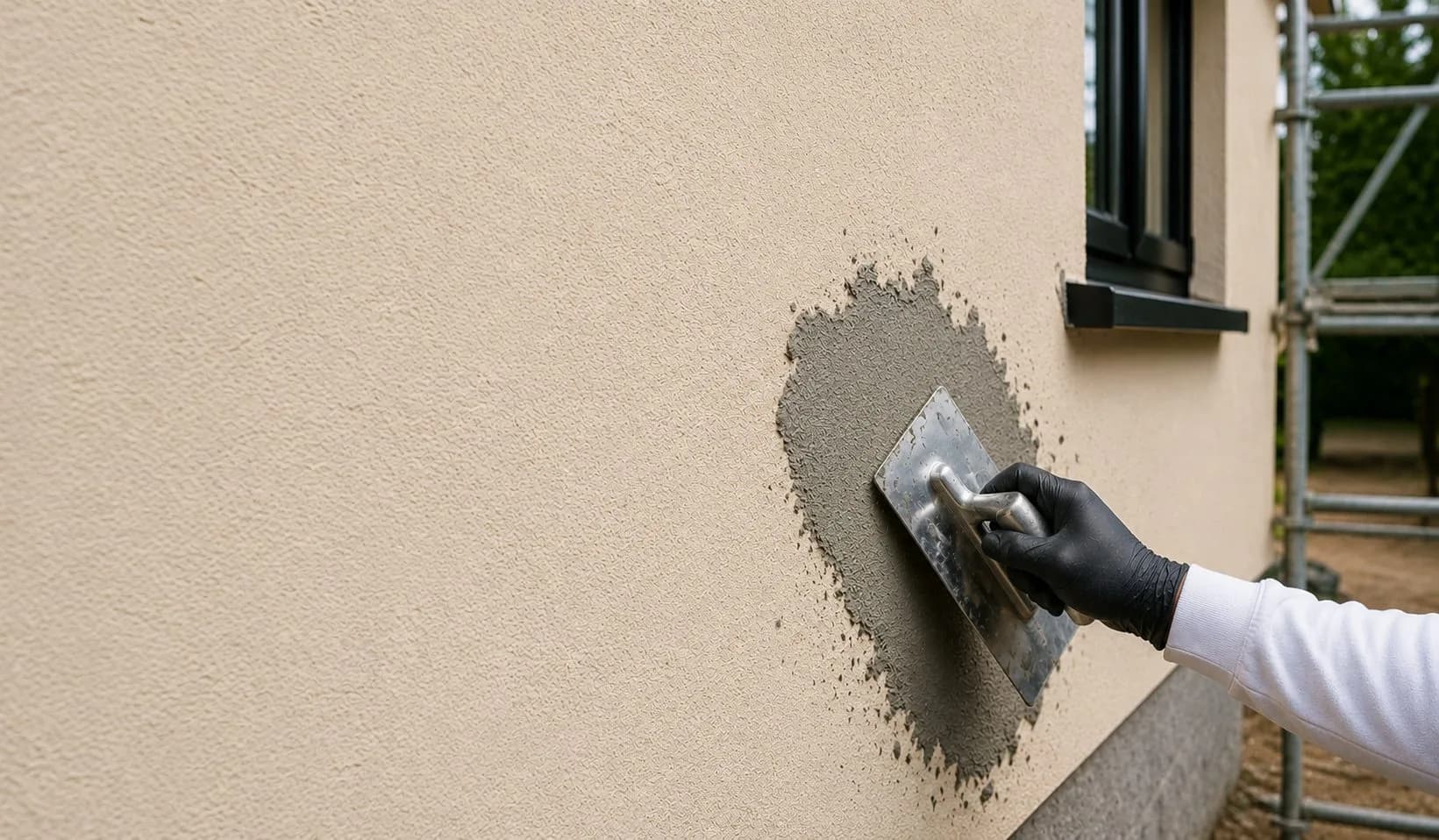
- External rendering / scratch coat. A sand-cement or polymer render applied externally as a base for paint, silicone render or monocouche. See our render repairs and silicone render pages for external systems.
Typical plastering costs per m² and per room
The figures below are indicative for Yorkshire, including York, Harrogate and Leeds. They include materials and labour but exclude access equipment and any preparatory work beyond normal surface preparation.
| Work type | Per m² | Typical room (15–20m² ceiling + walls) |
|---|---|---|
| Skim coat | £18 – £30 | £450 – £850 |
| Dot and dab + skim | £40 – £60 | £900 – £1,800 |
| Dry lining and skim | £22 – £35 | £450 – £950 |
| Patch repairs (skim) | Quoted individually | Quoted individually |
Prices are guide prices only and vary depending on access, preparation, room size and specification. Every project is surveyed individually before a fixed quotation is provided.
What adds cost beyond the basic m²
Several factors move the final plastering cost above the per-m² headline figure:
- Existing plaster removal. Where the existing plaster has blown away from the wall or is contaminated with damp or salts, it must be stripped before new work can go on. Stripping adds both labour and disposal cost.
- Ceiling height. Standard rooms are priced on the assumption of normal ceiling heights. Rooms with high or vaulted ceilings require additional access equipment and take longer to work.
- Minimum charges. Most plasterers apply a minimum day rate for small jobs. A single small patch repair or one ceiling will typically be priced as a minimum job rather than at the per-m² rate.
- Preparation of the substrate. Where old paint, wallpaper or contamination needs removing before plastering can begin, this is usually priced separately from the plaster work itself.
How to prepare for a plastering job
Preparing properly reduces the time a plasterer needs on site — which reduces cost and disruption. The key steps:
- Clear the room of furniture and valuables, or move them to the centre and cover them well. Plaster spray reaches further than most people expect.
- Remove picture hooks, curtain rails and any fittings from walls that are being plastered.
- Establish whether any damp investigation needs to happen before plastering — plastering over active damp is a short-term fix that will fail.
- Confirm that any first-fix electrical or plumbing work is complete before the plasterer attends, as chasing cables and pipes into fresh plaster is disruptive.
New plaster needs to dry thoroughly before painting. Drying time varies depending on the plaster system, the thickness applied, and conditions including temperature, humidity and ventilation. Painting too soon traps moisture and causes the finish to fail.