The short answer is: rendering can add value, but the relationship is not straightforward. Whether it improves your sale price depends on the condition of the existing exterior, the local market, the system you choose and how the work is presented to buyers. This guide cuts through the marketing claims to give you an honest picture.
Kerb appeal and first impressions
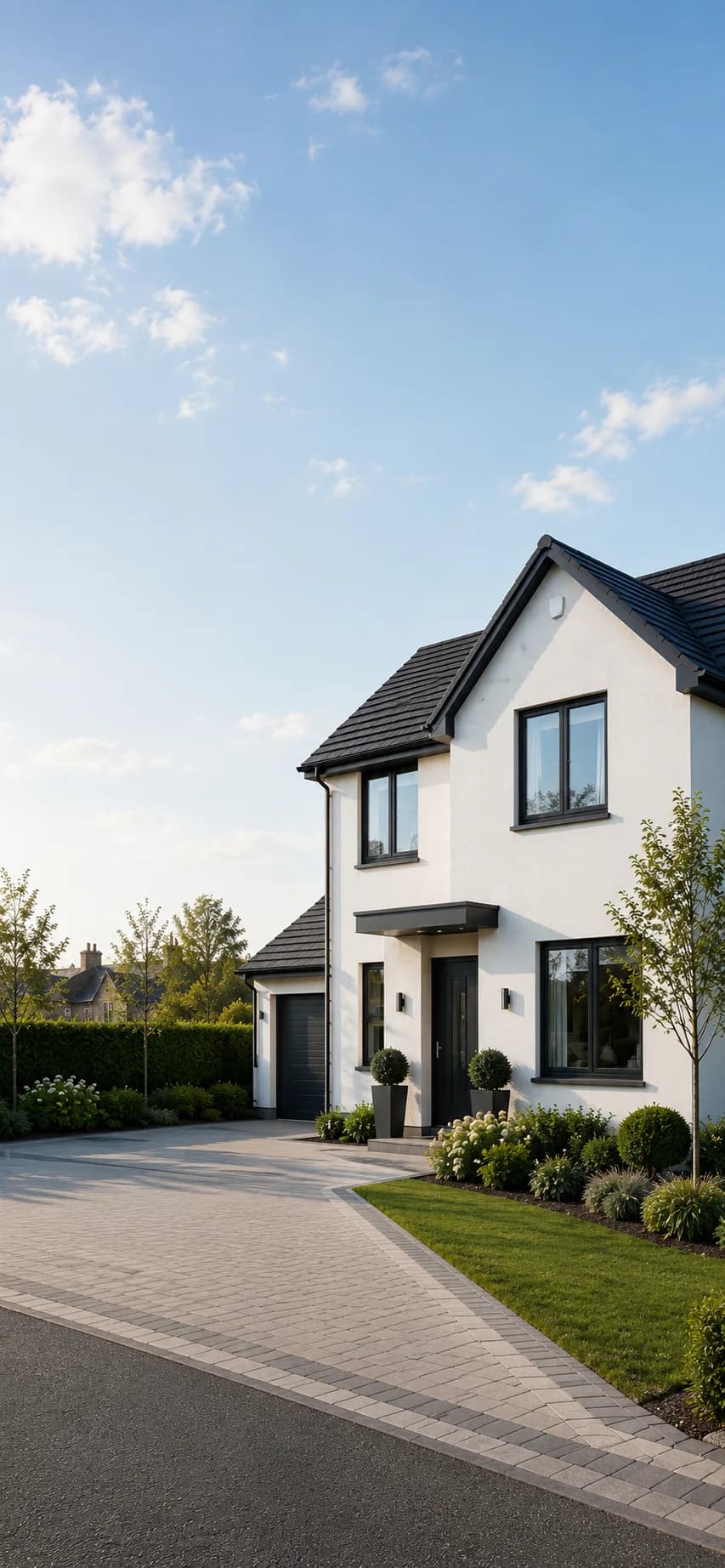
Research into buyer behaviour consistently shows that buyers form strong initial impressions within seconds of seeing a property. A property with failing, stained orpebbledash-covered walls creates an immediate negative signal — one that the buyer then carries into the viewing. A property with a clean, contemporary rendered exterior arrives without that burden.
Estate agents working in Yorkshire markets with significant pebbledash stock — Leeds, Bradford, Wakefield — frequently report that properties stripped of pebbledash and re-rendered attract more enquiries and achieve higher sale prices than equivalent unrenovated properties. Whether this represents a genuine value uplift or simply reflects faster sale in a competitive market is harder to quantify precisely.
When rendering is likely to add value
Rendering is most likely to add genuine value in three scenarios:
- Replacing failing or unsightly render. If the current external finish is cracked, blown, stained or pebbledashed, replacing it removes a visible defect that buyers will negotiate against. In this case rendering does not add value so much as recover value that the failing exterior was suppressing.
- Markets where rendering is aspirational. In areas where contemporary rendered properties command a premium over traditional brick, a well-executed render job on an unremarkable brick exterior can genuinely move the property into a different bracket. This effect is more pronounced in urban markets and on larger properties.
- Combined with EWI. External wall insulation that significantly reduces energy bills can be quantified in terms of running cost reduction and EPC improvement, and buyers increasingly pay attention to energy ratings. An EWI installation that moves a property from EPC D to B is a measurable improvement that can be reflected in the asking price.
When rendering may not increase the sale price
Rendering is less likely to add measurable value when:
- The existing exterior is already sound and presentable. Replacing a clean, well-maintained brick or stone exterior with render is a matter of taste, not correction of a defect. Buyers in many Yorkshire markets prefer exposed brick or stone, and rendering over it can be divisive rather than universally appealing.
- The local market doesn't support it. In some areas, rendered properties are not notably more valuable than brick equivalents. A local estate agent can tell you whether rendering is aspirational or neutral in your specific postcode.
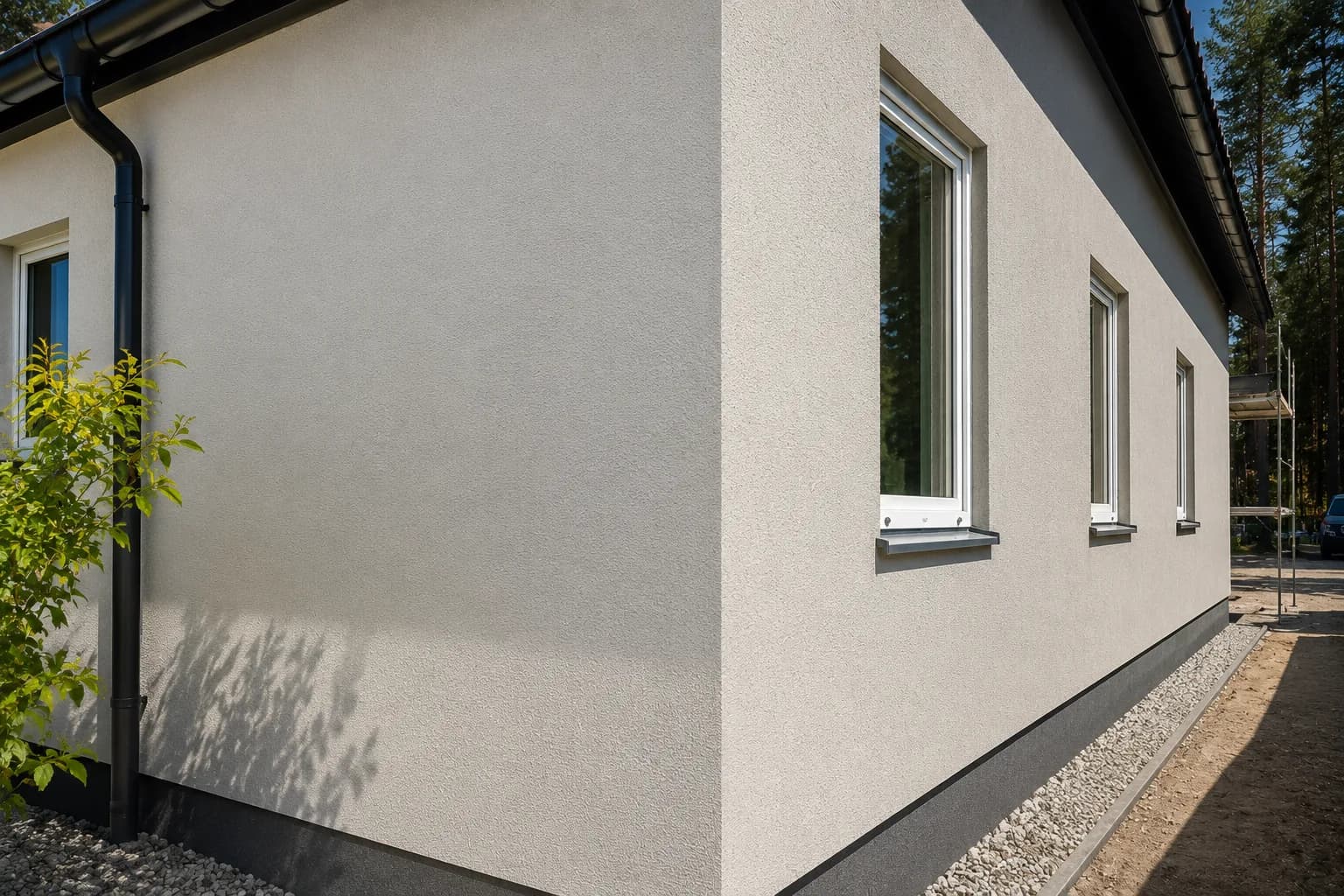
- The work is not done to a high standard. Poor workmanship — uneven texture, visible beads, cracking within a few years — creates a defect rather than an asset. The quality of the installation matters as much as the system specification.
The EPC angle: External Wall Insulation and energy ratings
The most quantifiable case for rendering adding value is through EWI and its effect on energy performance certificates. EPC ratings are increasingly used by buyers and mortgage lenders as a proxy for running costs, and a property that moves from EPC D to B or C through an EWI installation has a documented, transferable improvement.
Government data and academic research consistently find a price premium for higher-rated properties. The size of that premium varies by market, but it is real and measurable in a way that pure aesthetic improvements are not. If improving energy efficiency is part of your rationale for rendering, EWI is the route that makes the value case most clearly.
For more on EWI costs and what to expect from a project, see our EWI cost guide.