
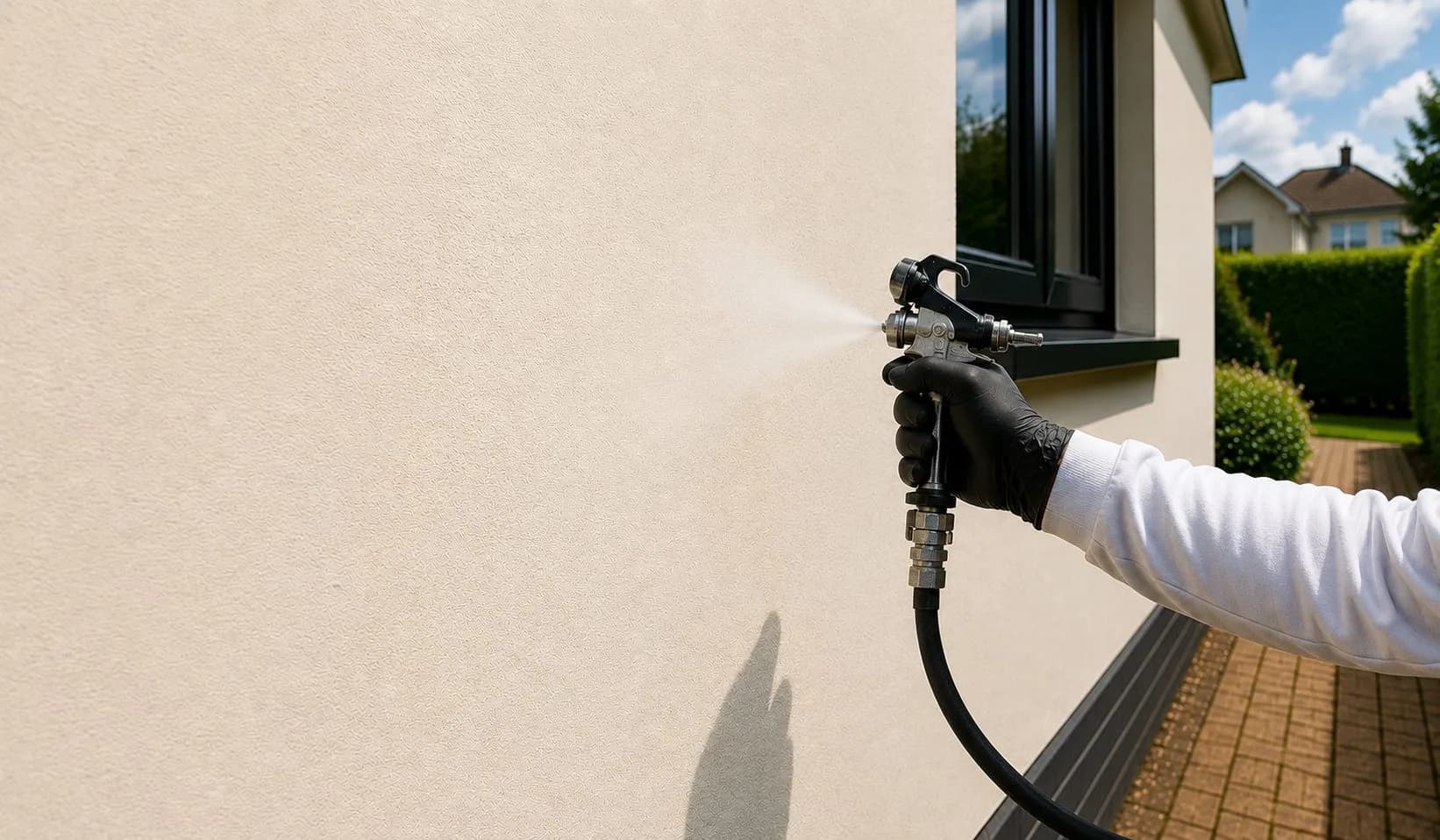
Protective Coating in Hull
A protective coating is a high-build, breathable exterior coating applied over sound existing render or masonry — restoring the appearance of the wall and delivering weather protection, UV resistance and a water-repellent finish without the cost or disruption of full render removal and replacement.
- Free Survey & QuoteNo obligation — confirmed within one working day
- 17+ Years ExperienceTrusted across Yorkshire since 2009
- Fully InsuredPublic liability & workmanship cover on every job
- Manufacturer AccreditedApproved installer — warranty-valid on every system
Protective Coating — what you need to know
A protective coating is a high-build, breathable exterior coating applied over sound existing render or masonry — restoring the appearance of the wall and delivering weather protection, UV resistance and a water-repellent finish without the cost or disruption of full render removal and replacement. Protective coatings are specified where the existing render is structurally sound but stained, weathered, faded or losing its appearance. They extend the life of the existing render system and are available in a wide colour range.
Hull's estuary position and genuine coastal exposure mean that render systems fail faster here than inland — salt-laden wind and high humidity accelerate deterioration of poorly specified systems. A correctly specified silicone or mineral render system, installed with the right primer and base coat, is a more cost-effective long-term choice than repeated repairs to a failing legacy finish.
Free · No Obligation
Get a quote for Protective Coating in Hull
We visit your property, assess the work and give you a fixed written quote. No call centres, no pressure, no hidden charges.
Request Free SurveyOr call +447774708801Common situations we resolve
Coastal properties where a water-repellent coating over sound render would reduce the salt moisture ingress
Sound existing render that is stained, algae-covered or faded and needs refreshing
Previously painted render where the paint is failing and an upgrade to a longer-life coating is needed
Properties where full re-rendering is not practical or necessary but improved weather resistance is needed
Exposed masonry or brick on a solid-wall property needing weather protection without a full render system
Property considerations in Hull
Hull's Victorian and Edwardian terraced housing stock, which forms a large proportion of residential Hull, was built to brick construction. The city's position on the north bank of the Humber Estuary means properties face genuinely coastal levels of wind and moisture loading — significantly more than inland Yorkshire cities. External render has often been applied to Hull properties as a retrofit weather protection measure, and the quality of that render — its adhesion, flexibility and water resistance — matters more here than in more sheltered locations.
Hull's estuary position means properties, particularly on west-facing and riverside elevations, experience higher wind-driven rain and salt exposure than is typical inland, which accelerates weathering of render systems and makes a high-quality, flexible render system a sound investment.
Hull & surrounding areas
Our approach
Survey and substrate assessment
We assess the existing render or masonry to confirm it is sound enough for a coating — any blown, cracked or structurally failing areas must be repaired first. We advise on whether a protective coating is the right specification or whether a full re-render would be more cost-effective long-term.
Preparation and repair
The surface is cleaned (soft or pressure wash as appropriate), any cracks are filled and sealed, and the surface is primed with the appropriate primer for the existing substrate and coating system.
Coating application
The protective coating is applied by brush, roller or spray in the specified number of coats. High-build coatings may be applied in two coats to achieve full coverage and the correct dry film thickness.
Inspection and handover
We inspect the completed surface for full, even coverage and address any areas requiring a further pass. The surface is left to cure fully before being exposed to rain or temperature extremes.
What determines the cost
We provide fixed written quotes — what you are quoted is what you pay. The factors below determine where your project sits within the range for this type of work.
- Wall area to be coated
- Extent of surface preparation and crack repairs needed before coating
- Coating specification — standard and premium systems vary in cost
- Application method — spray is more efficient on large elevations
- Scaffolding requirement
The most accurate way to understand the cost for your specific property is a free on-site survey. We assess the substrate, take measurements and provide a full itemised written quote.
Why homeowners in Hull choose us
- One team throughout — no subcontractingThe same experienced team that surveys your property carries out the work and completes the final inspection — clear accountability from first visit to handover.
- Free survey, no obligationWe visit your property, assess the substrate, take measurements and provide a written quote with an honest recommendation. No pressure to proceed.
- Specialists — rendering and plastering is all we doOur specialism means better system knowledge, more careful application, and finishes that perform as the manufacturer intended.
Related services in Hull
Protective Coating in nearby areas
Common questions
How is a protective coating different from masonry paint?
Masonry paint is a thin decorative finish. A protective coating is a high-build, breathable weather barrier that delivers significantly more protection — greater thickness, better crack-bridging and longer service than standard paint. Protective coatings are also formulated to be more water-repellent and UV-resistant. They are specified where the existing render is sound but needs weatherproofing rather than replacing.
Can a protective coating be applied over painted render?
Usually yes, provided the existing paint is firmly adhered and not flaking. Loose or powdering paint must be removed — applying over a failing surface causes the coating to fail with it. We assess existing surface adhesion during the survey.
Is a protective coating suitable for a solid-brick Victorian property?
For solid-walled properties, breathability is important — trapping moisture behind an impermeable coating on a solid wall can cause damp problems. Protective coatings specified for breathable applications are appropriate. We assess the wall's moisture condition and specify the correct breathable product during the survey.
Does a protective coating need scaffolding?
For single-storey properties, protective coatings can often be applied from ladders. For two-storey or larger properties, or where access constraints exist, scaffolding is the safer and more practical approach and is included in the quote where needed.
Does coastal exposure affect the render system specification in Hull?
Yes — coastal locations like Hull require a render system specified for higher moisture and salt exposure. We use systems rated for coastal conditions: a compatible primer on the prepared substrate, a reinforced base coat, and a silicone or mineral finish coat with appropriate flexibility and water-repellence. We assess the specific property's exposure level during the free survey and specify accordingly.
Useful guides for protective coating in Hull
Ready to transform your property?
Get a free, no-obligation quote from Yorkshire's premium rendering and insulation specialists. We typically reply within one working day.