
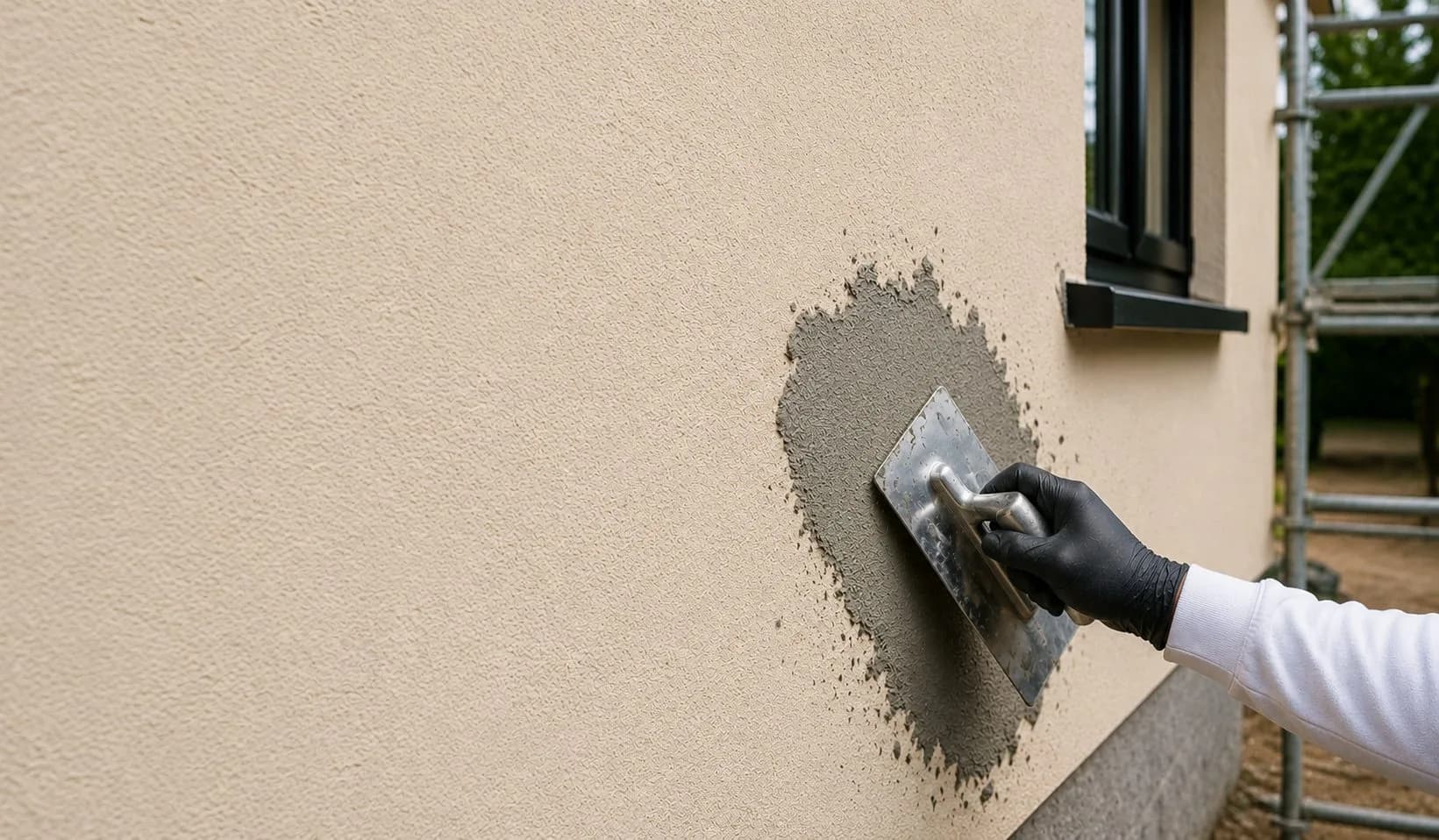
Render cracks are almost never random. Each type of crack has a cause, and the cause matters when deciding whether a coating can seal it, a localised repair can fix it, or the system needs replacing. Treating the symptom without understanding the cause is one of the most common reasons render work fails early. Here are the five causes we see most often, and what they mean for the right course of action.
1. Thermal movement
The most common cause of render cracking — and one that is easy to mistake for a more serious problem. All building materials expand when warm and contract when cold. Over years of seasonal cycling, those tiny dimensional changes accumulate stress in the render coat. The result is fine, evenly spaced cracks across the surface — sometimes called map cracking or crazing — that follow no particular structural logic.
Thermal movement cracking is most common on thin render coats and on south-facing elevations that see the widest temperature swings between seasons. Fine surface crazing on an otherwise fully adhered render is not a reason to replace the whole system — in most cases a high-quality silicone protective coating can seal the cracks, restore weather resistance and extend the life of the existing render by a decade or more.
2. Freeze-thaw damage
Yorkshire's winters deliver enough wet-cold cycles to stress any permeable render coat. Water that has entered hairline cracks expands by around 9% when it freezes, prying the crack wider with each cycle. Over successive winters, small cracks become large ones, and surface chips and blow-outs develop at the points where freeze pressure has been highest.
This is why render condition often deteriorates noticeably between autumn and spring. The right response depends on how far the process has progressed: early-stage freeze-thaw damage — fine cracks, no blown sections — can usually be sealed with a coating. Where sections have physically detached or crumbled, those areas need to be removed and rebuilt before any surface treatment will hold.
3. Substrate failure (blown render)
Where render has lost its bond to the wall behind it — either because it was applied over an inadequate substrate, or because moisture has got between the render and the masonry — sections will ‘blow’: they delaminate from the wall and create a hollow void behind the surface. Tap a wall systematically with your knuckles: a hollow, drum-like sound indicates blown sections, while a solid thud indicates good adhesion. Visually, blown render often shows as bulging areas or as a network of cracks that follow the edges of detached sections.
Blown render cannot be coated over — any coating applied over a hollow section will eventually crack at the same boundary, because the render beneath it is still moving away from the wall. The only durable repair is to remove the failed sections, thoroughly prepare the underlying substrate, and re-render those areas with a compatible system.
4. Application or specification problems
Cracks that appear within the first one to three years of a render installation almost always indicate a workmanship or specification problem rather than normal material behaviour. The most common: render applied in frost or high summer heat before it has cured properly; an incompatible base coat and finish coat used together; or a finish coat applied too thinly for the system manufacturer's specification.
These cracks typically follow a different pattern from thermal movement — they may be more irregular, distributed across large flat areas, or show colour variation at crack edges where different drying rates have pulled pigment unevenly. If a relatively new render installation is cracking, the warranty and the original contractor are the first places to look before any repair work starts.
5. Structural movement
Some cracks in render do not originate in the render coat itself — they follow movement in the building structure beneath. Diagonal cracks running from the corners of windows or doors, cracks at the junction of an extension with the main house, or a crack that re-appears in the same place after being filled are all signs that something is moving below the render surface. This may be differential settlement, thermal movement of the structure, or — in rarer cases — an active structural problem.
Render repairs over a structural crack will fail at the same point, often within one season. If you notice this type of pattern — especially if the crack is widening, has differential movement across it, or is associated with other signs of structural distress — it is worth having a structural engineer or experienced surveyor assess it before any render work is commissioned.
The right starting point
Most surface cracking on fully adhered render can be sealed and stabilised without full replacement. Where sections have blown, those sections need to be removed and replaced. Where there is a structural cause, the underlying movement needs to be understood before anything goes on top. A proper assessment — tapping the wall, looking at where cracks run and how they relate to the building structure — is what separates a durable repair from one that fails within a year.
If you are unsure what is causing your render to crack, contact us for a free survey. We will tell you honestly whether it needs a coating, a repair or a re-render — and why. You can also read more about our render repair service or our guide to rendering costs in Yorkshire.