
Render Repairs in Goole
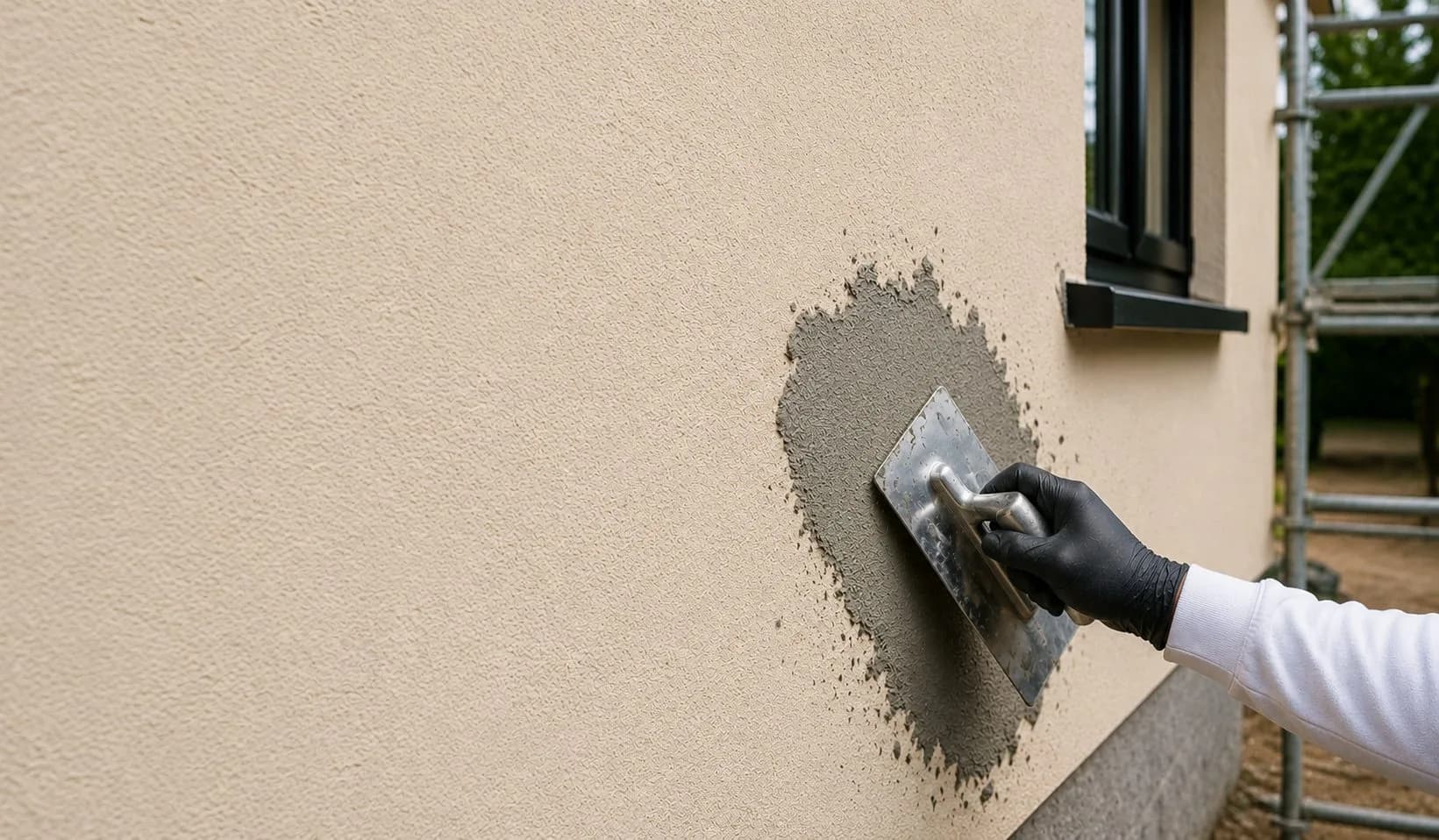
Render repairs address areas where an existing render finish has failed — cracked, hollow-sounding (blown), stained or delaminated sections that are allowing moisture to penetrate the wall behind.
- Free Survey & QuoteNo obligation — confirmed within one working day
- 17+ Years ExperienceTrusted across Yorkshire since 2009
- Fully InsuredPublic liability & workmanship cover on every job
- Manufacturer AccreditedApproved installer — warranty-valid on every system
Render Repairs — what you need to know
Render repairs address areas where an existing render finish has failed — cracked, hollow-sounding (blown), stained or delaminated sections that are allowing moisture to penetrate the wall behind. Correctly executed render repairs extend the life of the overall render system and prevent the more significant damage that occurs when water reaches the masonry substrate. We assess each property to distinguish between cosmetic surface cracks, which can be treated without removing the render, and structural failures where the render has lost adhesion and must be cut out.
Goole's low-lying position at the confluence of two rivers and its exposure to multi-directional wind loading make render system quality particularly important — the town's Victorian brick terraces are exposed to persistent moisture and require a flexible, well-adhered render system to prevent water ingress. Silicone render's breathability and water repellence makes it the appropriate specification for properties in Goole's exposed position.
Free · No Obligation
Get a quote for Render Repairs in Goole
We visit your property, assess the work and give you a fixed written quote. No call centres, no pressure, no hidden charges.
Request Free SurveyOr call +447774708801Common situations we resolve
Solid Victorian masonry where freeze-thaw cycling has repeatedly blown patches of the render each winter
Hairline or structural cracks in render that allow water ingress
Blown render — sections that have lost adhesion and sound hollow when tapped
Render stained by water marks, algae or rust streaks from embedded fixings
Localised damage from impact, vehicle contact or seasonal weather events
Property considerations in Goole
Goole is a distinctive Victorian planned port town at the confluence of the River Ouse and the Dutch River, and its housing stock largely dates from the late Victorian and Edwardian periods when the docks were expanded. The town's grid-planned streets of brick terraces and semi-detached properties are typical of purpose-built industrial housing from this era. Howden, Rawcliffe and Hook in the surrounding district include older rural properties in stone and brick.
Goole's low-lying, flat position at the confluence of two rivers means properties can be exposed to strong winds from multiple directions — wind loading on render is a genuine consideration, particularly on taller or more exposed properties.
Goole & surrounding areas
Our approach
Diagnosis
We tap-test the render across the affected area to identify hollow (blown) sections, trace the extent of any cracking and assess the cause. Understanding why the render has failed is essential — repairing the surface without addressing the underlying cause (e.g. a missing expansion joint, a water ingress point, inadequate substrate preparation originally) will result in the repair failing in the same place.
Cutting out and preparation
Blown or failing render is cut back to a sound edge. The substrate behind is cleaned, dried and assessed. Any masonry damage is repaired before render is applied. The cut edge is undercut where possible to provide a better mechanical key for the repair mortar.
Repair application
Repair mortar is applied in layers, matching the original system thickness. Where the finish colour and texture needs to match the surrounding render, we use a compatible finishing coat. An exact colour match to weathered existing render is not always possible — this is discussed with the client before work begins.
Finishing
Repaired areas are finished to match the existing render texture as closely as possible. Visible patch lines fade over time as the new render weathers. If the number of patches means the overall appearance would benefit from a protective coating or overpaint, we advise on this option.
What determines the cost
We provide fixed written quotes — what you are quoted is what you pay. The factors below determine where your project sits within the range for this type of work.
- Number and size of areas requiring repair
- Depth of failure — surface crack filling versus full-depth cut-out and re-render
- Whether scaffolding is required to access the damaged areas
- Colour matching difficulty — matching weathered render tone
- Whether the underlying cause (water ingress point, expansion joint failure, structural movement) needs addressing before repair
The most accurate way to understand the cost for your specific property is a free on-site survey. We assess the substrate, take measurements and provide a full itemised written quote.
Why homeowners in Goole choose us
- One team throughout — no subcontractingThe same experienced team that surveys your property carries out the work and completes the final inspection — clear accountability from first visit to handover.
- Free survey, no obligationWe visit your property, assess the substrate, take measurements and provide a written quote with an honest recommendation. No pressure to proceed.
- Specialists — rendering and plastering is all we doOur specialism means better system knowledge, more careful application, and finishes that perform as the manufacturer intended.
Related services in Goole
Render Repairs in nearby areas
Common questions
What causes render on an old solid-brick house to blow each winter?
On solid-walled properties, moisture can enter the render through hairline cracks or poorly detailed junctions. Once behind the render, water expands on freezing, breaking the adhesion between the render and the masonry. Repeated freeze-thaw cycles progressively enlarge the blow. The underlying cause is usually a water entry point — a crack, a failed junction or a missing drip detail — rather than a failure of the render material itself.
Our Victorian terrace has been repaired multiple times and is now uneven — at what point is full re-render more cost-effective?
When repairs have been carried out repeatedly over a short period, or the patched area covers more than a third of the wall, full re-render is usually more cost-effective than ongoing repair. Patching over previous patches creates thickness variations that tend to crack further. We assess the cumulative repair history during the survey and give a clear recommendation on whether further patch repair is viable or whether full re-render is the better long-term outcome.
Can we patch repair render, or do we need to re-render the whole wall?
Patch repair is the right approach where the failure is localised and the rest of the render is sound and well adhered. If the failure is widespread across more than a third of the wall area, full re-rendering is usually more cost-effective in the long run. We give you an honest recommendation on this after assessing the extent of the failure during the survey — including the likely long-term appearance of patch repairs on the specific wall.
Why has our render blown repeatedly in the same place?
Recurring blow in the same location indicates an active cause that has not been addressed: a persistent water ingress point (a crack at a junction, a failed sealant at a window frame, a blocked or missing drip detail), or an expansion stress point with no joint. Repairing the surface without resolving the cause means the repair will fail in the same place. We identify the cause during the survey and confirm what needs addressing before repair work starts.
Useful guides for render repairs in Goole
Ready to transform your property?
Get a free, no-obligation quote from Yorkshire's premium rendering and insulation specialists. We typically reply within one working day.