
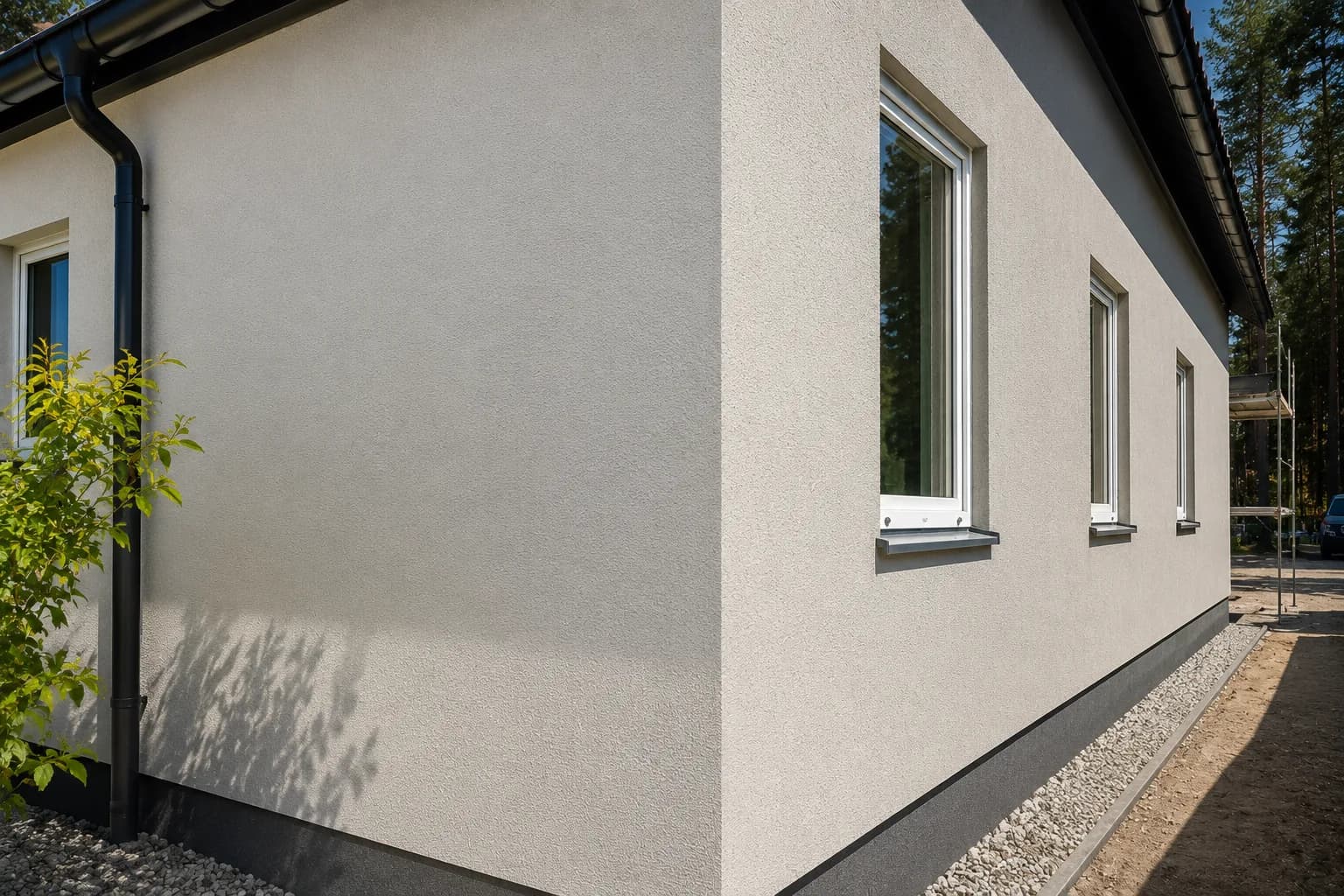
Monocouche Render in Ossett
Monocouche render is a factory-mixed, single-coat mineral render that is scraped back to reveal an aggregate texture — giving a through-coloured, characterful finish that differs in appearance from the fine-textured silicone render more common on modern properties.
- Free Survey & QuoteNo obligation — confirmed within one working day
- 17+ Years ExperienceTrusted across Yorkshire since 2009
- Fully InsuredPublic liability & workmanship cover on every job
- Manufacturer AccreditedApproved installer — warranty-valid on every system
Monocouche Render — what you need to know
Monocouche render is a factory-mixed, single-coat mineral render that is scraped back to reveal an aggregate texture — giving a through-coloured, characterful finish that differs in appearance from the fine-textured silicone render more common on modern properties. The term monocouche means 'single coat' — the render is mixed to specification in the factory, applied in a single coat to the prepared substrate, and scraped back before it fully sets to achieve the final texture. The colour is integral to the mix, which means no surface painting is needed. Monocouche is the traditional choice for period properties and conservation areas where a silicone render would look out of place.
Solid-walled Victorian properties in Ossett benefit from quality external render for weather protection — silicone render is chosen for re-render projects in the area for its long-term durability and low maintenance.
Free · No Obligation
Get a quote for Monocouche Render in Ossett
We visit your property, assess the work and give you a fixed written quote. No call centres, no pressure, no hidden charges.
Request Free SurveyOr call +447774708801Common situations we resolve
Homeowners who want a natural mineral render appearance rather than a modern polymer finish
Properties where the original render was monocouche and a like-for-like replacement is needed
Properties where a textured mineral finish is required to complement the character of adjacent stone or brick buildings on the street, regardless of the property's own construction era
Exposed high-ground properties where a robust single-coat mineral system is preferred for its durability on heavily weathered elevations
Properties adjacent to listed buildings or in sensitive heritage contexts where the local authority requires a traditional render specification
Property considerations in Ossett
Ossett is a market town west of Wakefield in the Calder valley area, with a proud independent identity. The housing stock includes Victorian stone and brick terraces and semi-detached properties in the town centre and on the older residential streets, interwar semi-detached development, and post-war and modern estates on the periphery. Many of the Victorian properties have solid masonry walls. Ossett was incorporated into Wakefield district in 1974 but retains its own community character and town centre.
Ossett's West Yorkshire position means consistent rainfall and some exposure to westerly weather — solid-walled Victorian properties benefit from well-maintained external render for weather protection.
Ossett & surrounding areas
Our approach
Survey and specification
We assess the substrate, confirm the wall is sound and suitable for monocouche, and agree the colour and texture from the manufacturer's range. Conservation area constraints are identified at this stage.
Substrate preparation
The wall is cleaned, any failed existing render removed, and masonry repaired where needed. Render profiles and angle beads are fixed. Monocouche requires a well-prepared, stable substrate — it is a single coat, so the substrate quality determines the quality of the finish.
Monocouche application
The render is applied in a consistent thickness — typically 15–20mm — to the entire wall in one pass. The render is left to cure to the correct hardness before being scraped back with a scraper to the required texture profile.
Finishing
The scraped render is inspected for consistency of texture and colour. The wall is left to cure fully. No painting is required and the surface has good self-cleaning properties.
What determines the cost
We provide fixed written quotes — what you are quoted is what you pay. The factors below determine where your project sits within the range for this type of work.
- Total wall area to be rendered
- Substrate preparation required — significant old render removal or masonry repairs add cost
- Scaffolding requirement
- Colour and aggregate specification — some premium specifications are more expensive
- Conservation area requirements that may restrict colour or texture choice to approved options
The most accurate way to understand the cost for your specific property is a free on-site survey. We assess the substrate, take measurements and provide a full itemised written quote.
Why homeowners in Ossett choose us
- One team throughout — no subcontractingThe same experienced team that surveys your property carries out the work and completes the final inspection — clear accountability from first visit to handover.
- Free survey, no obligationWe visit your property, assess the substrate, take measurements and provide a written quote with an honest recommendation. No pressure to proceed.
- Specialists — rendering and plastering is all we doOur specialism means better system knowledge, more careful application, and finishes that perform as the manufacturer intended.
Related services in Ossett
Monocouche Render in nearby areas
Common questions
What is the difference between monocouche and silicone render?
Monocouche is a factory-mixed mineral render applied in a single coat and scraped back to an aggregate texture — it has a natural, traditional appearance suited to period properties and conservation areas. Silicone render is a polymer-modified system applied in two coats with a finer, more contemporary texture. Both are through-coloured and do not require painting. The choice depends on the property type, planning constraints and preference.
Does monocouche render require planning permission?
For most residential properties, no planning permission is required. However, properties in conservation areas or listed buildings need to check with the local planning authority. Monocouche is often specifically acceptable in conservation areas where silicone render might be refused — its mineral aggregate texture reads as more traditional.
Can monocouche be applied over existing render?
Only if the existing render is fully sound and well adhered. Any hollow or cracked sections must be removed and made good before monocouche is applied. Monocouche is a single coat — there is no base-coat layer to hide substrate defects, so the background quality is critical to the finished result.
How do we maintain monocouche render once applied?
Monocouche is low-maintenance by design. An annual inspection of junctions at reveals, sills and the base termination is worthwhile — these are the areas most likely to develop hairline cracks that let water in. Washing the wall with clean water when dusty or stained restores the appearance. Avoid high-pressure washing at reveals and termination details. Any open hairline cracks should be sealed promptly before water can work its way behind the render.
Useful guides for monocouche render in Ossett
Ready to transform your property?
Get a free, no-obligation quote from Yorkshire's premium rendering and insulation specialists. We typically reply within one working day.