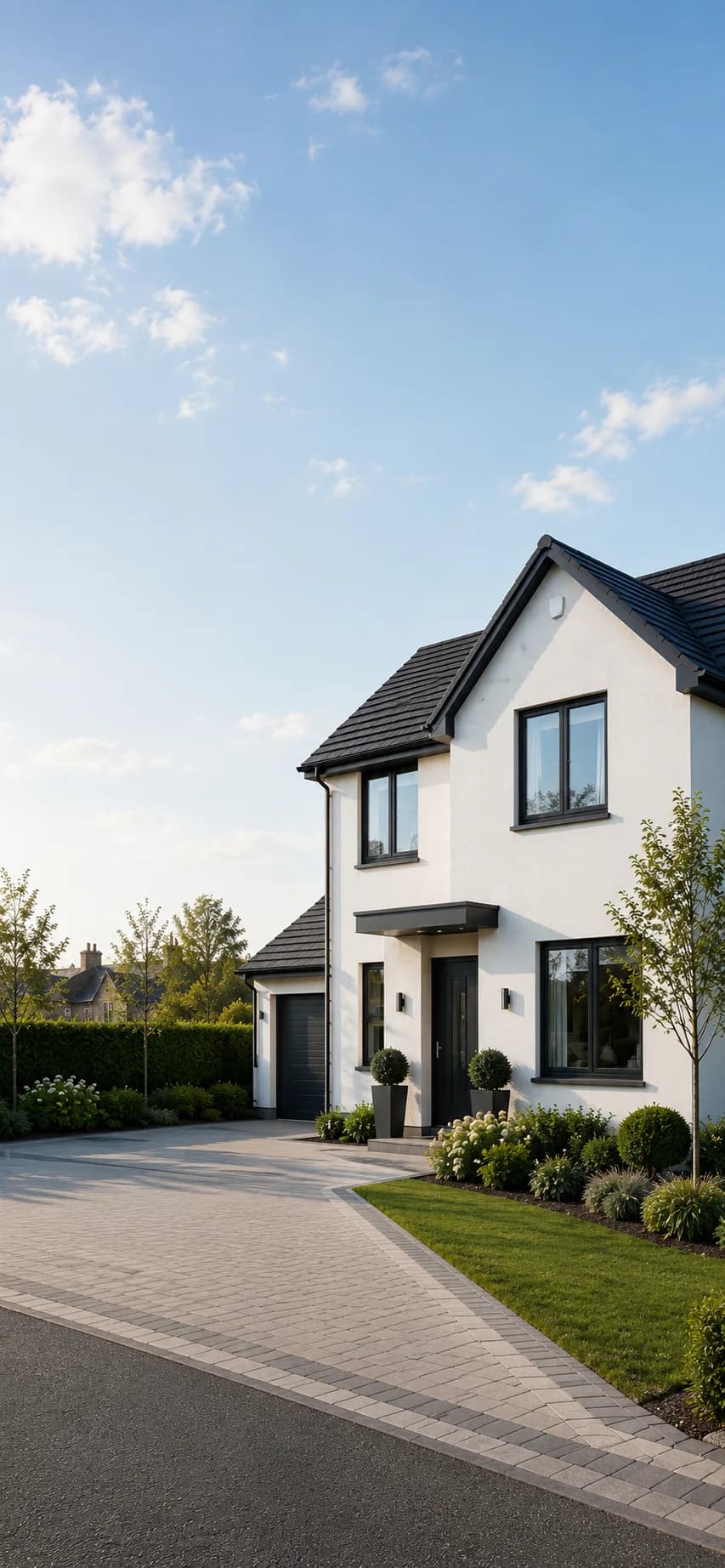
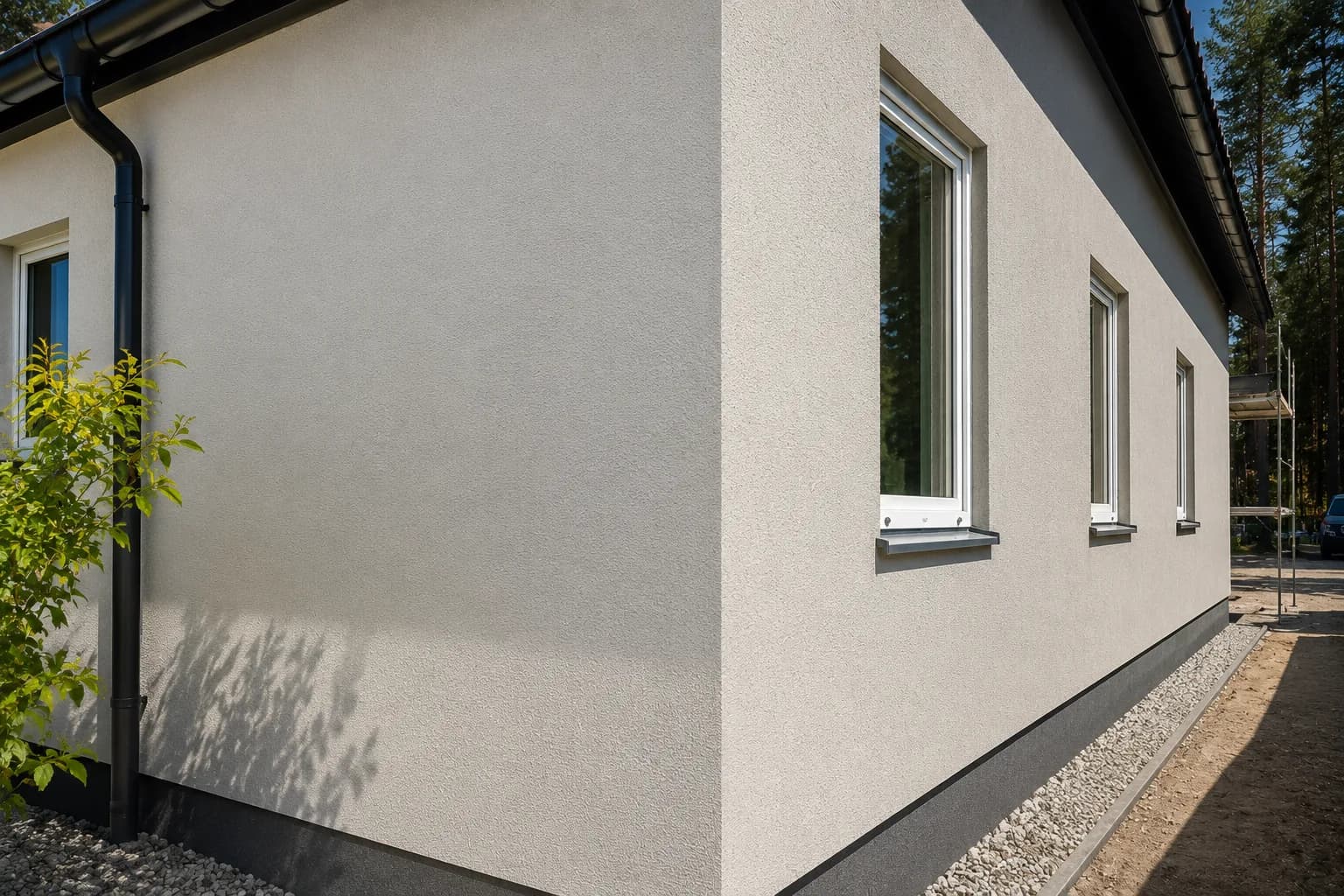
Both silicone render and monocouche are through-coloured systems — neither needs painting after installation — but they are different materials applied differently, with different textures, different suitability for different property types, and different strengths. Choosing between them comes down to four factors: the aesthetic, the planning context, the substrate and the budget.
What is silicone render?
Silicone render is a polymer-modified finish coat — factory-mixed, through-coloured and ready to apply over a suitable primed base coat. Its defining property is hydrophobicity: silicone molecules in the mix cause water to bead and run off the surface rather than being absorbed, while still allowing water vapour from within the wall to pass outward (breathability).
The self-cleaning effect of silicone render is a practical advantage in Yorkshire's climate: rainfall washes dirt off the surface rather than driving it in, so the finish stays cleaner for longer than a painted or less hydrophobic alternative. The colour range available in silicone systems — typically several hundred shades from major manufacturers — is wider than monocouche, with a full spectrum from pale neutrals through to bold contemporary colours. See our silicone render service page for more detail on the system.
What is monocouche render?
Monocouche — from the French for “single coat” — is a factory-mixed mineral render applied in one relatively thick coat and scraped back while still fresh. Scraping (pulling a serrated float across the surface before the render fully sets) reveals the aggregate in the mix, creating a slightly textured, through-coloured finish that has a natural, masonry-like character.
The scraping process requires skill — the timing and technique affect the final texture significantly — and is what makes monocouche a specialist application rather than a commodity finish. The resulting surface is genuinely breathable and, because it is a mineral system rather than a polymer, tends to have a slightly more traditional appearance that sits naturally alongside stone and brick. See our monocouche render service page for more detail.
The key differences between silicone and monocouche
| Factor | Silicone render | Monocouche render |
|---|---|---|
| Appearance | Fine pebble or smooth texture, contemporary look | Scraped texture, natural mineral character |
| Colour range | 300–500+ shades, full spectrum | ~100–150 shades, natural/stone tones |
| Application | Finish coat over primed base coat | Single-coat, scraped back while fresh |
| Water resistance | Highly hydrophobic — water beads off | Breathable, moderate water resistance |
| Maintenance | Very low — self-cleaning surface | Very low — no painting required |
| Conservation areas | Heritage colours increasingly accepted | More commonly accepted |
| Typical longevity | 25+ years | 25–30+ years |
| Relative cost | Similar to monocouche | Slightly higher (skilled scraping) |
Which properties suit silicone render
Silicone render is the right choice when the primary requirements are low maintenance, wide colour choice and weather performance. It suits the widest range of properties — interwar semis, post-war houses, modern extensions and any property where the goal is a clean, contemporary external finish without long-term maintenance commitment.
The self-cleaning surface is particularly valuable on properties in areas with algae or mould risk — north-facing elevations, sheltered positions with limited airflow, or properties near trees. In Yorkshire's wet climate, a hydrophobic surface that sheds water quickly is a practical advantage on any elevation.
Which properties suit monocouche render
Monocouche is the right choice when the aesthetic requirement is a natural, textured finish that reads as masonry rather than a modern coating. It suits period properties, properties in or near conservation areas, and rural properties where a contemporary polymer finish would look out of place. The more limited but carefully considered colour range of monocouche tends to produce finishes that sit better in traditional streetscapes.
In conservation areas — including the extensive designations in York and Harrogate — monocouche is more commonly accepted than silicone render because its mineral character and texture more closely resemble historic render and roughcast finishes. If you are in or near a conservation area, it is worth establishing what the local planning authority's position is on both systems before choosing — in some areas, heritage silicone colours are also accepted.