Silicone render is the most popular premium exterior render system in the UK, and it carries a higher price than sand-cement or painted alternatives. Whether it is worth that premium depends on what your property needs, how long you plan to own it, and what trade-offs you are prepared to make. This guide gives you an honest breakdown.
What silicone render actually does
Silicone render gets its name from the silicone polymer binders in the mix. These give the finished surface two properties that distinguish it from traditional renders and painted coatings:
- Hydrophobicity. Water beads on the surface and runs off rather than soaking in. This dramatically slows the penetration of rainwater into the render body and the wall behind it.
- Breathability. Despite being water-repellent externally, silicone render remains vapour-permeable — water vapour within the wall can still pass outward. This prevents moisture being trapped and pressure building behind the render.
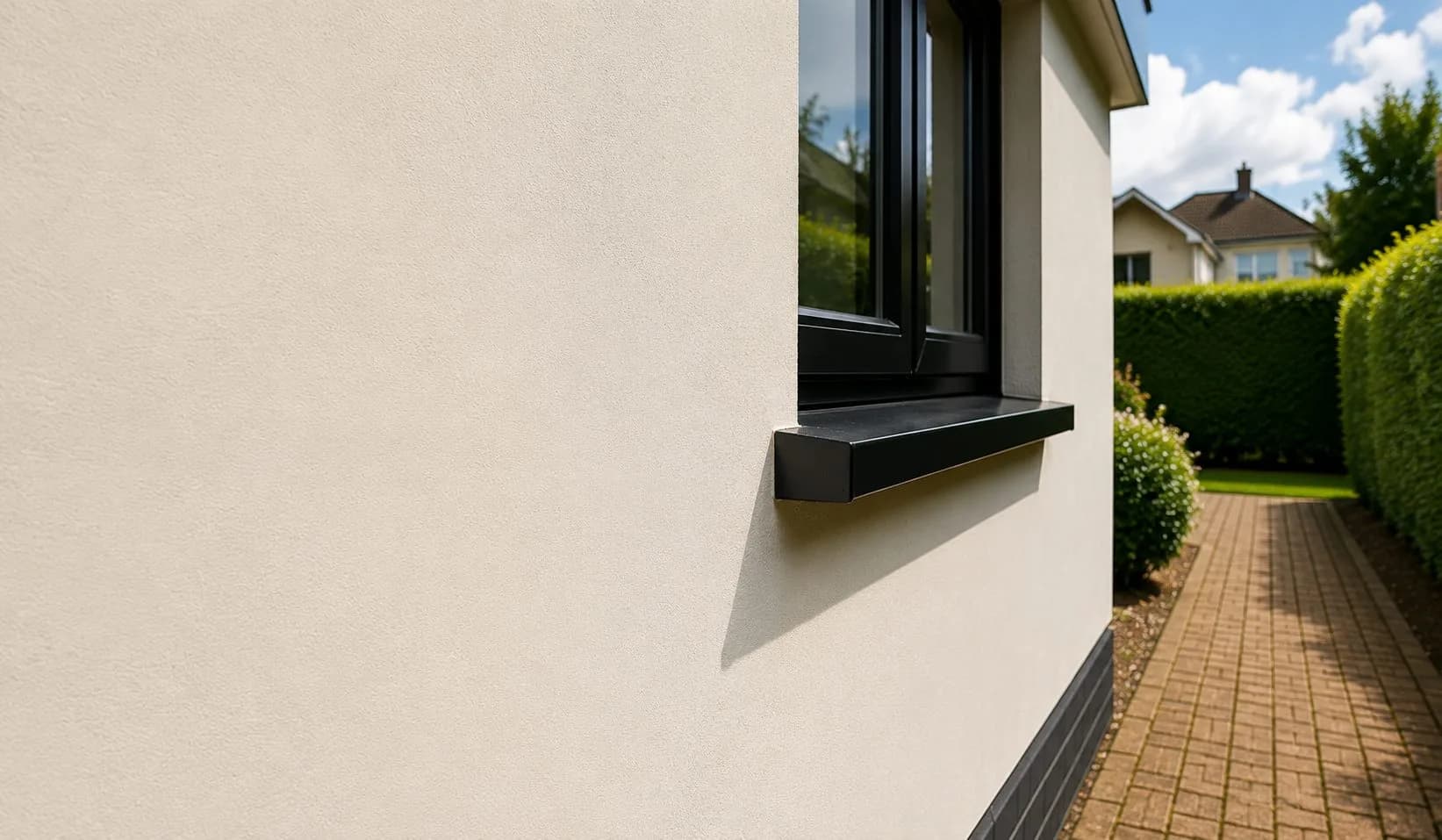
Silicone render is also through-coloured — the pigment is mixed into the render itself, not applied as a paint on top. This means the colour is integral rather than a surface layer that can peel, chalk or fade unevenly.
Where silicone render genuinely outperforms alternatives
Compared to sand-cement render with masonry paint on top, silicone render offers three material advantages:
- Lower long-term maintenance. A painted render typically needs repainting every 8–12 years. A silicone render system applied by an approved installer carries a manufacturer-backed system warranty of up to 25 years — and in practice, well-maintained silicone render can perform for longer. Over a 25-year horizon, the absence of repainting cycles can make the higher initial cost look favourable.
- Self-cleaning behaviour. The hydrophobic surface causes rain to sheet off rather than soak in, carrying surface dirt with it. Silicone render stays cleaner between washes than painted alternatives, particularly in exposed Yorkshire locations such as Scarborough and coastal or west-facing properties.
- Colour stability. Through-coloured silicone render fades gradually and evenly over time, rather than peeling, cracking or developing patches. Several hundred standard shades are available.
When silicone render may not be the right choice
Silicone render is not always the best answer. Three scenarios where it may not be worth the premium:
- Short ownership horizon. If you are rendering primarily to sell and plan to do so within five years, the long-term maintenance savings that justify the silicone premium may not materialise. A good-quality protective coating applied over sound existing render can deliver a fresher appearance at lower cost.
- Conservation area requirements. Some conservation areas specify lime or mineral-based renders that do not include silicone polymer binders. If your property falls under planning controls that restrict render type, the question may be moot. Check with your local authority before specifying a system.
- Sound existing render. If your existing render is sound — well-bonded to the substrate, no significant cracking, no signs of moisture ingress — a breathable masonry paint or protective coating is a far cheaper way to refresh the appearance without the cost of stripping and replacing the render system.
Cost compared to alternatives
For a typical three-bedroom semi-detached house in Yorkshire, the rough cost comparison across exterior finish options looks like this:
| Option | Upfront cost | Recoat cycle |
|---|---|---|
| Masonry paint (over existing render) | £1,000 – £2,500 | Every 6–10 years |
| Protective coating | £2,000 – £5,000 | Every 10–15 years |
| Silicone render (new system) | £4,500 – £11,000 | 25+ year system life |
These figures are indicative and depend heavily on property size, substrate condition and access. The point is that the silicone render premium is real but so is the maintenance saving. Over a 25-year period, the total cost of ownership can be comparable to or lower than repeated repainting cycles.
The honest verdict
Silicone render is worth the premium when:
- You plan to own the property for ten or more years
- The existing render needs replacing anyway
- You want a low-maintenance finish that will not need repainting within the next two decades
- The property is in an exposed location where good weatherproofing matters
It may not be worth the premium when the existing render is sound, the ownership horizon is short, or planning constraints limit your system options.
A free survey from Sprayplast will tell you what condition your existing render is in and whether replacement, repair or a surface treatment is the most cost-effective route for your specific property. Arrange a survey here.