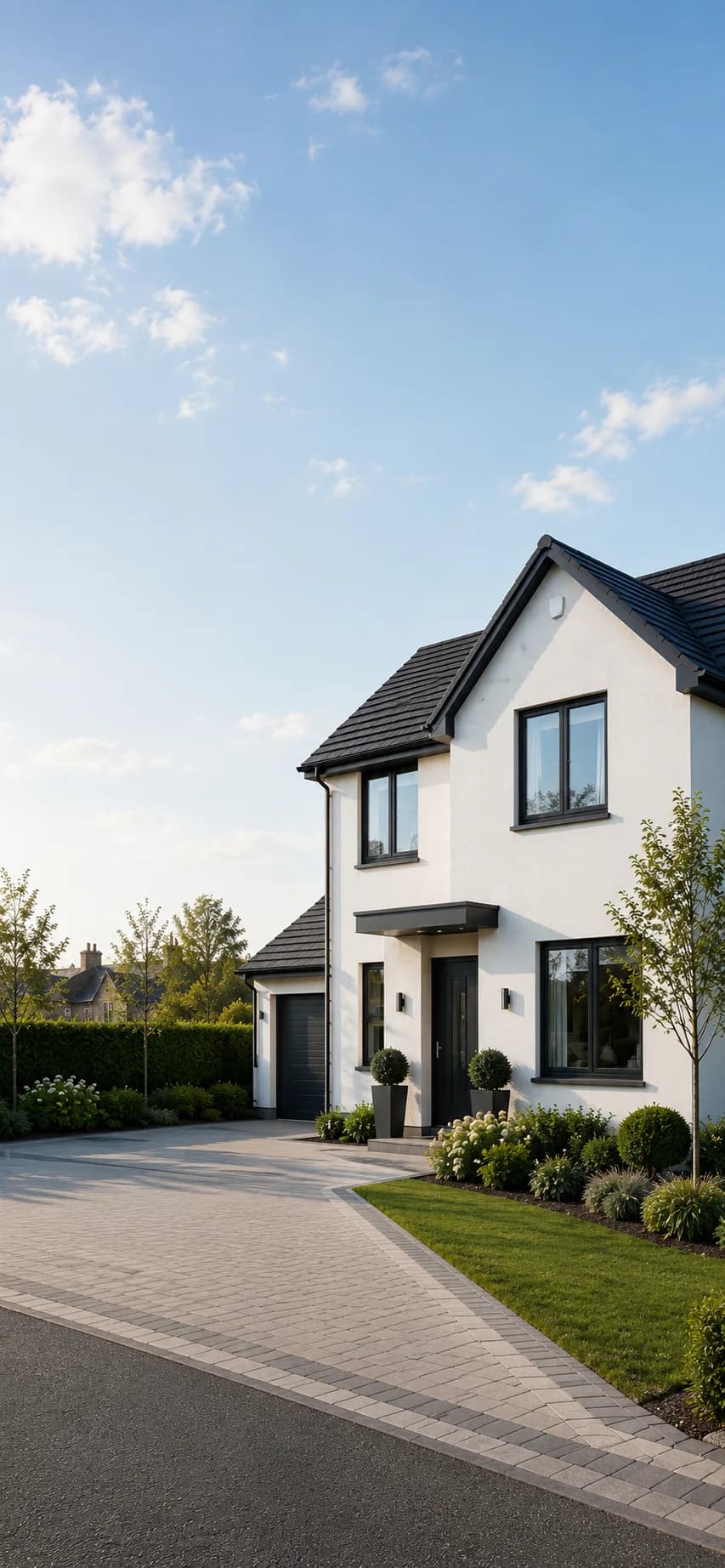
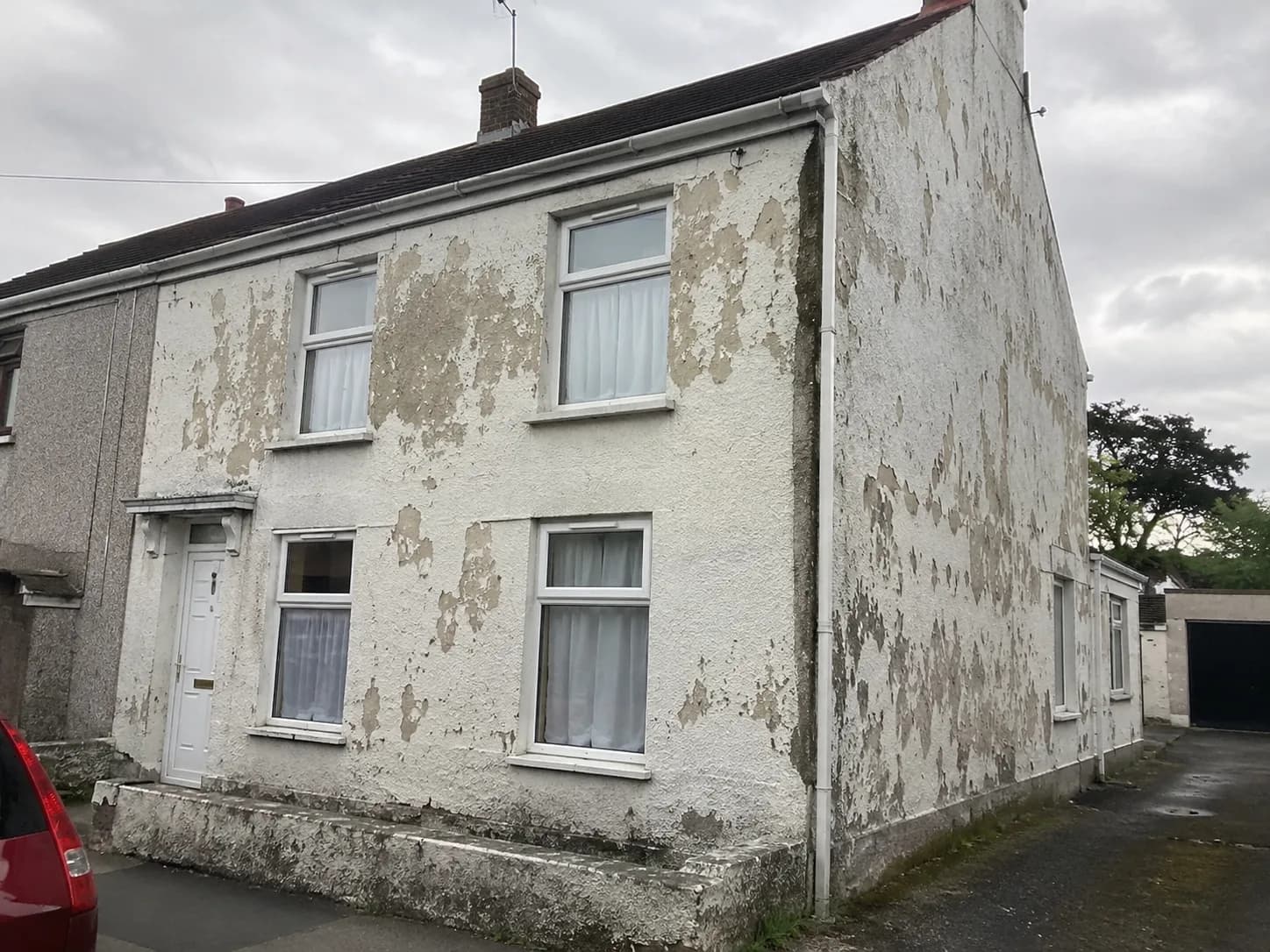
Pebbledash is the external finish on a huge proportion of Yorkshire housing built between the 1920s and 1970s — interwar semis in Leeds and Bradford, post-war estates in Wakefield and Hull, bungalows across Harrogate's suburbs. Much of it is now approaching or past its effective service life. Homeowners are regularly told they must remove it, or alternatively that it can simply be coated over — neither is always right. The correct answer depends on the pebbledash's condition, not its appearance.
What pebbledash is
Pebbledash is a sand-cement render coat with aggregate (small stones or pebbles) thrown onto the surface while the render is still wet, so the stones become embedded in the material. It was widely used from the 1920s onward because it is durable, weather-resistant and requires no painting. The aggregate texture also makes surface cracking less visible than on smooth render, which may be one reason so much pebbledash that is actually in poor condition looks superficially acceptable from the street.
Option 1: Coat it
If the pebbledash is fully adhered to the wall behind it — no blown sections, no significant cracking, no active damp behind it — a high-performance silicone coating can be applied directly over the surface. This seals hairline cracks, restores water repellence, updates the colour and extends the life of the existing render. It is the lowest-cost option and involves minimal disruption. Cost range: approximately £25–40 per m² of treated surface.
The appearance change is significant — the texture remains pebble-dash rather than smooth, but the colour, sheen and general condition can be transformed. A silicone coating on sound pebbledash should perform well for ten to fifteen years before recoating is needed.
Option 2: Repair and coat
Where isolated sections have blown — typically less than 20–25% of the total surface area — the failed sections can be removed, the substrate re-rendered in a compatible material, and the whole surface then coated once the repairs have cured. The repaired areas will be slightly visible on close inspection because new pebbledash aggregate cannot be matched exactly to weathered original material, but once coated, the overall result is cohesive. This is a middle-ground option when the pebbledash is mostly sound but has localised failure.
Option 3: Remove and re-render
Where more than roughly 20–30% of the pebbledash has blown, or where the appearance goal requires a smooth or fine-textured finish rather than a pebble texture, full removal and replacement is the right approach. This involves stripping the entire pebbledash layer, preparing the exposed substrate, carrying out any masonry repairs, and then applying a new render system — typically silicone render for a contemporary finish or monocouche for a textured, through-coloured look.
The total cost is higher: stripping pebbledash adds roughly £30–55 per m² to the project, and the new render system then costs £55–90 per m² for silicone. Combined total: approximately £85–145 per m² depending on system and substrate condition. The result is a completely new, long-lived finish rather than a coating applied over an ageing substrate.
Option 4: Remove and add EWI
If thermal performance is a priority — particularly for properties with solid brick construction where there is no cavity to fill — removing the pebbledash as part of an EWI installation makes the costs more comparable. The pebbledash removal is included in the EWI process, and the total installed cost of an EWI system (insulation + render finish) is typically £100–155 per m² depending on insulation specification. The difference in cost versus re-rendering alone reflects the insulation value added: meaningful reductions in heat loss through solid walls, and the potential for lower heating bills over time.
How to decide
The starting point is always a physical assessment of the existing pebbledash. Tap the wall systematically — a hollow sound indicates blown sections that cannot be coated over durably. Look for active cracking that follows structural rather than thermal patterns. Check whether there is damp behind any sections. If none of these issues are present and you are satisfied with the pebble texture, coating is a sound option. If the finish is significantly failed, or if a smooth finish is what you want, removal and re-render is the appropriate path. If energy efficiency is a driver, EWI warrants serious consideration.
We carry out free on-site surveys across Yorkshire and will give you an honest assessment of which option makes sense for your property — get in touch to arrange one. You can also read more about our pebbledash removal service or our guide to rendering costs.