
External Wall Insulation in York
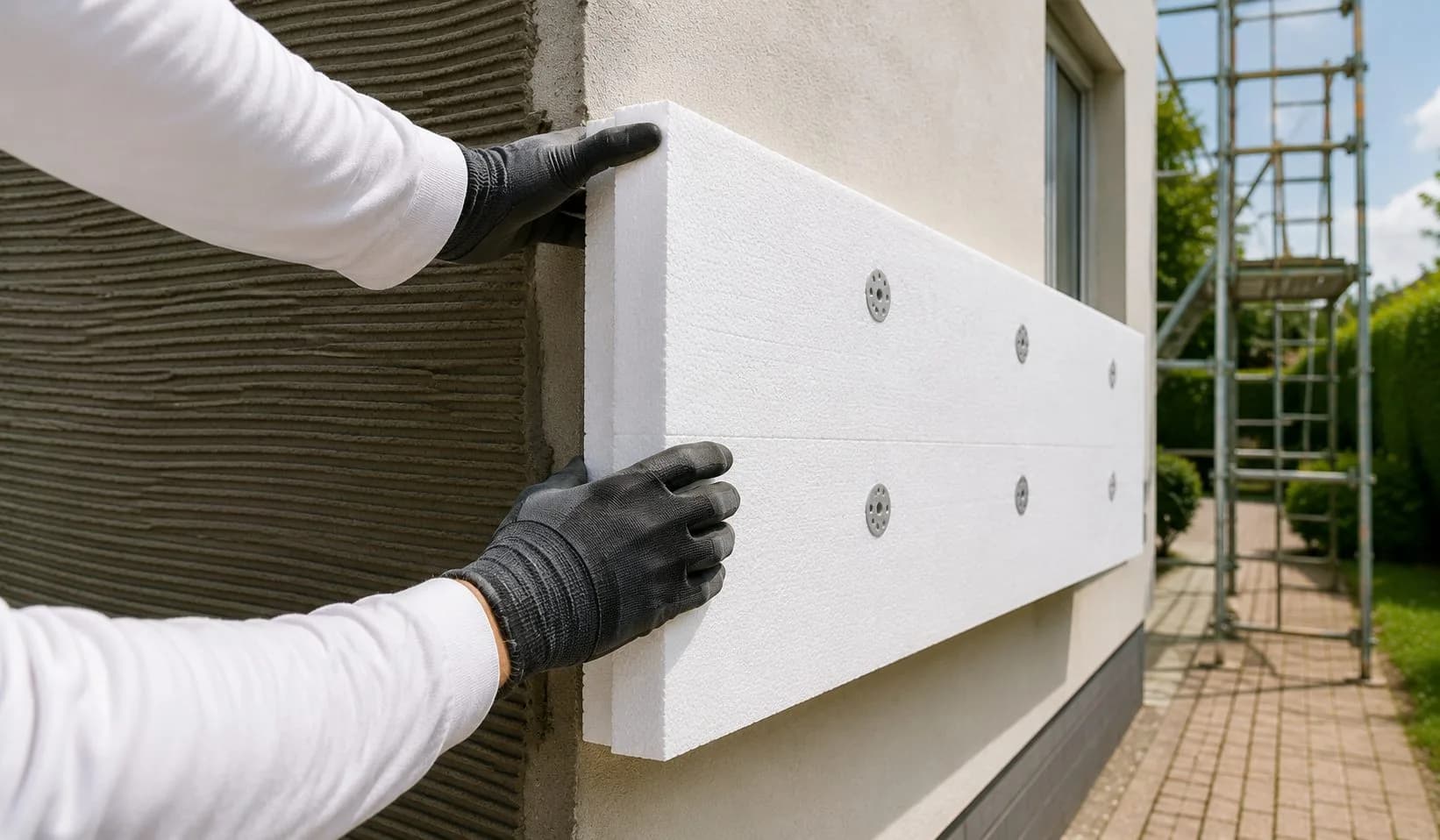
External wall insulation (EWI) adds a continuous layer of insulation to the outside of a property, then applies a render or coating finish over it.
- Free Survey & QuoteNo obligation — confirmed within one working day
- 17+ Years ExperienceTrusted across Yorkshire since 2009
- Fully InsuredPublic liability & workmanship cover on every job
- Manufacturer AccreditedApproved installer — warranty-valid on every system
External Wall Insulation — what you need to know
External wall insulation (EWI) adds a continuous layer of insulation to the outside of a property, then applies a render or coating finish over it. This transforms the thermal performance of the building without disrupting the interior — no loss of internal floor area, no need to vacate rooms. EWI is particularly effective on solid-walled properties (Victorian and Edwardian housing built before 1920), which cannot be cavity-fill insulated and where solid walls lose heat far more quickly than modern cavity-wall construction. EWI systems are available with silicone render, monocouche or protective coating finishes.
The solid masonry walls that characterise York's Victorian terraces rely on sound external render as the primary weather barrier — cracked or blown sections allow driving rain to penetrate directly to the brickwork. A durable silicone render system is the most practical long-term solution for homes in the Vale of York's consistently wet climate.
Free · No Obligation
Get a quote for EWI in York
We visit your property, assess the work and give you a fixed written quote. No call centres, no pressure, no hidden charges.
Request Free SurveyOr call +447774708801Common situations we resolve
Solid-walled Victorian or Edwardian properties with high heating costs and cold external walls that cannot be cavity-fill insulated
Properties where cavity wall insulation is not possible due to construction type or cavity condition
Homes where the external render is failing and the two projects — insulation and re-render — make sense to combine
Properties with condensation on inner wall surfaces or persistent cold spots on external walls in winter
Rural stone cottages where internal insulation would destroy the wall character but external EWI can be specified with a compatible mineral finish
Property considerations in York
York's housing stock spans several centuries of construction — Georgian townhouses in the city centre, Victorian and Edwardian terraces in Acomb, Holgate and Tang Hall, and interwar semis in Haxby and Rawcliffe. A significant proportion of the older stock retains original lime plaster internally, which responds differently to modern plaster skims and requires compatible materials to perform correctly. Properties in and around the city centre, and in villages such as Bishopthorpe and Copmanthorpe, may sit within or adjacent to conservation areas.
York's position in the Vale of York means consistent annual rainfall and periods of persistent damp weather that make weather-resistant external finishes particularly valuable for solid-walled Victorian properties.
Many properties within York's historic core and in designated conservation areas may require planning consent before changes to external render colour or finish — we can advise on this during the survey.
York & surrounding areas
Our approach
Survey and specification
We survey the property, measure the wall area, assess the substrate and identify any preparation needed (masonry repairs, making good before fixing boards). We specify the correct insulation thickness and render finish for the property's requirements and budget.
Preparation and substrate work
The wall is cleaned and any defective existing render or masonry is repaired. Window and door reveals are extended where required. Special attention is paid to reveals, sills, eaves details and the base of the wall where the insulation terminates.
Insulation board fixing
Insulation boards (EPS, mineral wool or phenolic, depending on specification) are mechanically fixed and adhesive-bonded to the wall in a staggered pattern. This creates a continuous, uninterrupted insulation layer with no cold bridges.
Base coat and mesh
A polymer-modified base coat is applied over the boards, and fibre mesh is embedded into the wet render. This base coat holds the system together and provides the reinforcing layer that distributes movement stresses.
Finish coat
The specified finish — silicone render, monocouche or protective coating — is applied to the cured base coat. The wall is now insulated, weatherproofed and given a fresh external appearance.
What determines the cost
We provide fixed written quotes — what you are quoted is what you pay. The factors below determine where your project sits within the range for this type of work.
- Total wall area to be insulated
- Insulation board type and thickness — thicker or higher-performance boards cost more but improve thermal performance
- Render finish specified — silicone, monocouche and protective coating vary in cost
- Substrate preparation — significant masonry repairs or removal of existing render adds cost
- Reveal extensions and window cill replacements required when boards increase the wall thickness
The most accurate way to understand the cost for your specific property is a free on-site survey. We assess the substrate, take measurements and provide a full itemised written quote.
Why homeowners in York choose us
- One team throughout — no subcontractingThe same experienced team that surveys your property carries out the work and completes the final inspection — clear accountability from first visit to handover.
- Free survey, no obligationWe visit your property, assess the substrate, take measurements and provide a written quote with an honest recommendation. No pressure to proceed.
- Specialists — rendering and plastering is all we doOur specialism means better system knowledge, more careful application, and finishes that perform as the manufacturer intended.
Related services in York
Common questions
Is EWI suitable for a Victorian terrace?
EWI is particularly well suited to pre-1920 solid-walled terraces, which lose heat more quickly through their walls than modern cavity-wall houses. The system is applied externally, so there is no disruption to the interior and no loss of internal floor area. EWI on a terraced property is typically applied to the front and rear elevations, with party walls left. Planning permission is usually not required for standard residential properties, though conservation areas and listed buildings need to check with the local authority.
Does EWI change the appearance of the property?
Yes — EWI adds to the external face of the wall, which changes the profile of window and door reveals and the overall external appearance. In practice, properties look freshly rendered after EWI, which most homeowners consider an improvement. Reveals are extended using appropriate profiles and the finish is consistent across the elevation. We bring colour and finish samples to the survey to help you choose.
Can EWI be applied to a rural stone property?
EWI on a stone-faced property is possible, though the finish coat needs to be specified carefully to be compatible with the rural setting — a monocouche or mineral render finish often reads better than a fine silicone texture on a stone building. In some cases, planning permission may be required if the stone finish is a character feature. We assess the property and advise on what is practical and permissible.
Are there grants available for EWI?
Government schemes — including the Great British Insulation Scheme and the Energy Company Obligation — may fund or part-fund EWI for qualifying households. Eligibility depends on property type, current insulation level and other factors. We can advise on what may be available and signpost to the relevant scheme administrators, though we do not administer grants directly.
Do I need planning permission for render work in York?
For most residential properties in York, changing external render colour or applying a new render system does not require planning permission. However, properties within York's conservation areas, or that are listed buildings, may need consent before any change to external appearance. We flag this risk during the survey and can advise on what is likely to be acceptable — but confirming with the local planning authority is recommended before work proceeds.
Useful guides for ewi in York
Ready to transform your property?
Get a free, no-obligation quote from Yorkshire's premium rendering and insulation specialists. We typically reply within one working day.