External wall insulation is a significant investment — typically £10,000–£20,000 or more for a full installation on a solid-walled Yorkshire semi. Whether it is worth it depends entirely on the property, the household and what the honest comparison is. This guide gives you a clear picture: where EWI genuinely delivers, where the financial case is weaker, and what to consider before making a decision.
Which properties genuinely benefit from EWI
EWI is most valuable on solid-walled properties — those built before the 1920s, before cavity wall construction became standard. In a solid-wall property, the external wall is a single leaf of brick or stone with no air gap. There is nowhere to inject insulation from outside, and internal wall insulation loses floor space and creates complex detailing challenges. EWI is the primary practical option for meaningfully improving the thermal performance of these walls.
Yorkshire has an unusually high proportion of pre-1920s housing stock. The back-to-back terraces of Leeds, Bradford and Wakefield, the Victorian semis of Harrogate and York, the stone-built properties of the Dales — these properties share a common characteristic: walls that lose substantially more heat than an equivalent modern or post-1930s cavity-wall property, because there is no cavity and no insulation in the wall construction.
EWI delivers progressively less additional thermal benefit on properties that already have insulated walls — modern construction or properties where cavity fill has already been installed. On these properties the comparison changes: EWI might still be worth considering, but for different reasons — primarily the external finish rather than the primary thermal improvement.
For more on whether your specific construction is suitable for EWI versus other insulation approaches, see our EWI vs cavity wall insulation guide, or visit our external wall insulation service page for full details on how the system is installed.
The thermal case: realistic energy savings
Heat loss through walls is one of several routes by which a building loses heat — the others being the roof, floor, windows, doors and ventilation. In a solid-walled Victorian property with no roof insulation and single-glazed windows, walls can represent 30–40% of total heat loss, making them the priority. In an already well-insulated home, wall loss may be a smaller fraction.
For a solid brick wall with no insulation, the typical U-value (the measure of heat flow through the wall) is around 1.7–2.1 W/m²K. EWI with 100mm of EPS insulation can reduce this to approximately 0.28–0.32 W/m²K — a reduction in wall heat loss of 80–85%. This is the thermal improvement that drives the energy saving.
What this means in practice for energy bills depends on how much of the total heat loss is through the walls, how the property is heated and at what temperature, the wall area relative to the total building envelope, and current energy tariffs. The energy saving from EWI on a typical solid-walled Yorkshire semi — where walls are a dominant heat loss route — is a real and meaningful reduction in heating demand.
Honest note
Headline energy saving figures in marketing materials are almost always modelled under ideal conditions. Your actual saving depends on your specific property, how it is occupied and how it is heated. Treat any specific figure as an illustrative estimate. An energy assessor can model this for your specific property.
EPC rating improvement
Energy Performance Certificates rate a property from A (most efficient) to G (least efficient). For a poorly rated property where uninsulated solid walls are a major contributor to the low rating, EWI can deliver a meaningful uplift. Moving from E to C or D is realistic for many Yorkshire solid-wall properties where EWI is combined with other reasonable improvements.
Why EPC rating matters:
- Landlord compliance. The Minimum Energy Efficiency Standards (MEES) currently require rental properties to have a minimum EPC rating of E. The government has signalled its intention to raise this requirement. Landlords with solid-walled Yorkshire properties should be actively considering their route to compliance.
- Mortgage access. Some lenders offer preferential rates for properties above a certain EPC rating. Lender requirements around EPC ratings for mortgage lending have tightened in recent years.
- Resale value. Buyers increasingly look at EPC ratings as a proxy for running costs. A property with a C rating rather than an E rating is demonstrably cheaper to heat, and this is increasingly reflected in buyer behaviour and valuations.
Effect on property value and kerb appeal
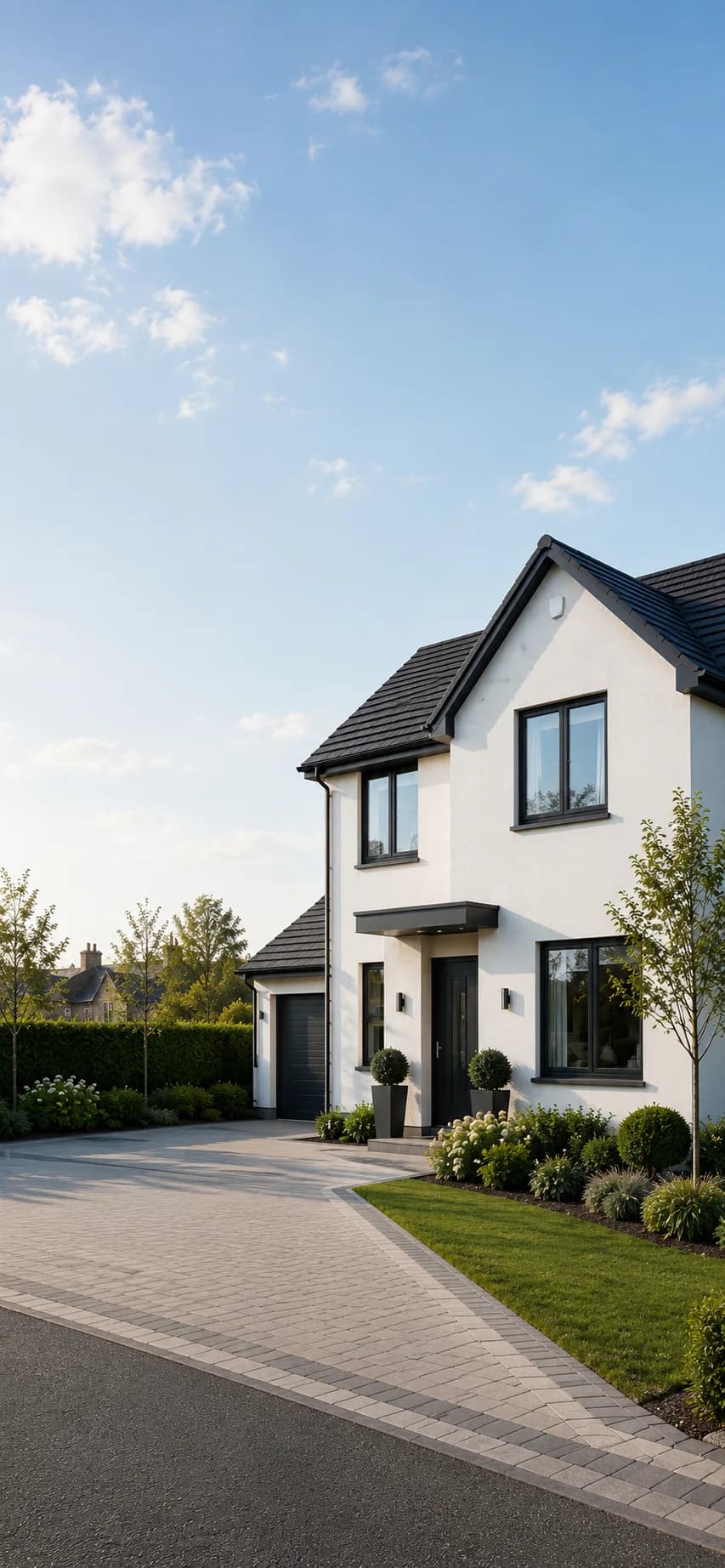
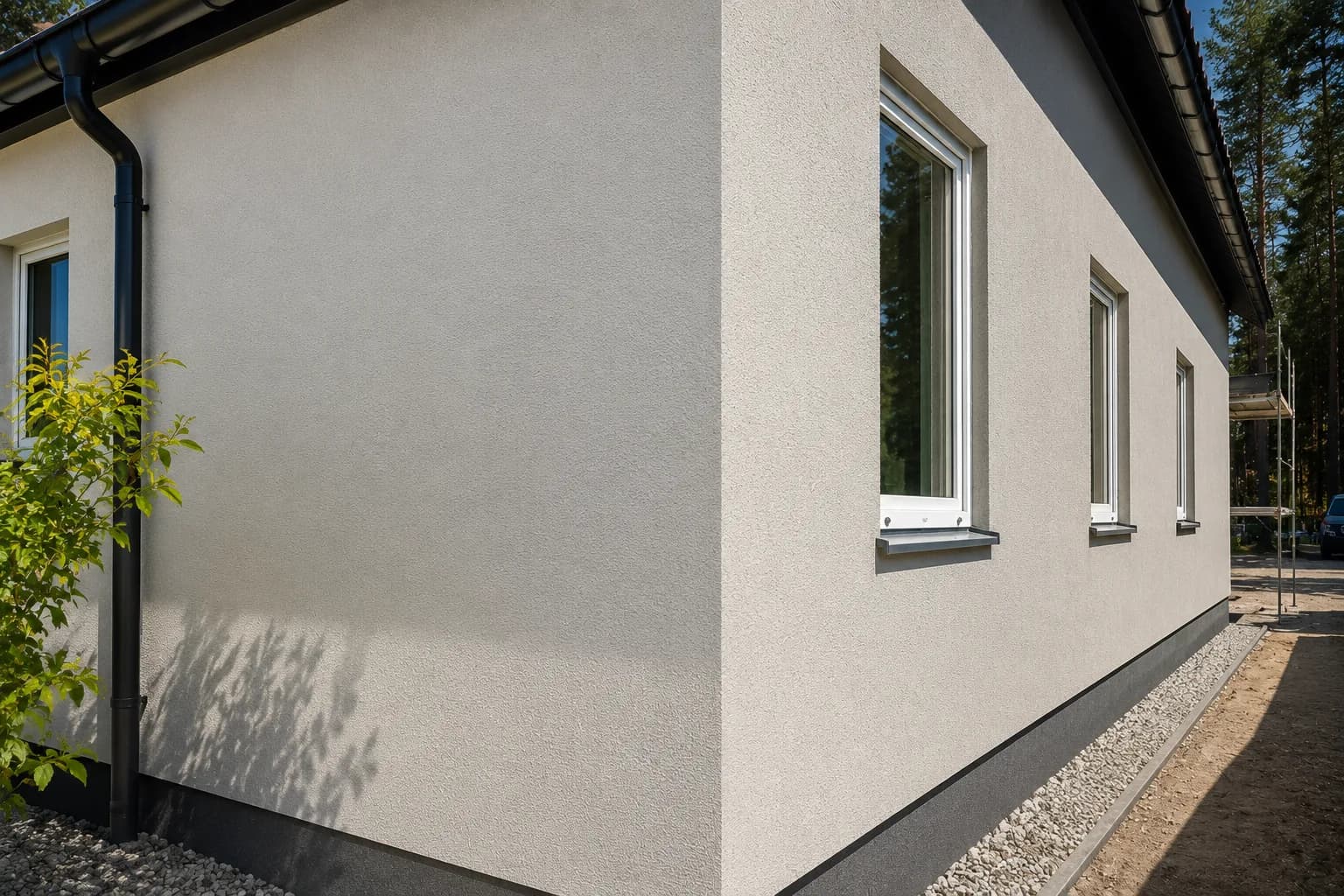
EWI changes the external appearance of a property significantly. A Victorian terrace with pebbledash or failing render, fitted with EWI and finished in contemporary silicone render, can look substantially different — and to most buyers, substantially better. This kerb appeal improvement can be meaningful in Yorkshire’s competitive housing markets.
Quantifying a specific value uplift from EWI in isolation is difficult, because the same improvement also includes a new external render finish that would carry a value premium on its own. The prudent approach is to think about EWI as a combined case: a new external finish that would cost a significant sum to provide anyway, plus the thermal improvement and EPC uplift, together improving marketability and likely value.
Treating EWI purely as a financial investment that pays back through energy savings alone misses the value of the external finish, the EPC improvement and the improved marketability — all of which are real, if harder to quantify precisely.
Payback period: the honest picture
The payback period for EWI — measured as time for energy savings to repay the installation cost — is typically longer than for simpler insulation measures such as loft insulation or cavity wall fill. This is not because EWI is ineffective; it is because EWI costs more to install and addresses wall heat loss, which is one component of total energy demand.
| What EWI delivers | Relevant comparison |
|---|---|
| Thermal improvement to solid walls | vs. uninsulated walls in perpetuity |
| New 25+ year render finish | vs. re-render at £5,000–£11,000 anyway |
| EPC rating improvement | vs. MEES compliance cost (landlords) |
| Improved kerb appeal and marketability | vs. properties with failing render |
The most important shift in thinking is to compare EWI against the realistic alternative — re-rendering anyway, plus the ongoing cost of uninsulated walls — rather than against doing nothing. For a property where existing render is failing, the incremental cost of upgrading to EWI over a standard re-render is often more moderate than the headline EWI price suggests.
For detailed cost figures, see our EWI cost guide.
When EWI is not the right choice
EWI is unlikely to be the best use of money in these situations:
- Short ownership horizon.If you plan to sell within three to five years, the primary financial benefit — the 25-year render life and the cumulative energy saving — will largely accrue to a future owner. A lower-cost re-render or protective coating may be more appropriate if the goal is primarily to improve the property’s appearance for sale.
- Cavity-wall property where fill is possible. If your property has a suitable, fillable cavity, cavity wall insulation is cheaper, less disruptive, and achieves meaningful thermal improvement. EWI is the answer when cavity fill is not available — not a general replacement for it.
- EPC already C or above. If the property already achieves EPC C or above, EWI may push the rating higher but the marginal benefit in thermal improvement and rating uplift is smaller than on a property starting at E or F.
- Unresolved active damp. EWI installed over a property with active rising damp, lateral damp through defective pointing, or penetrating damp from roof issues can make existing damp problems significantly worse. The underlying cause must be addressed before any EWI is considered.
- Planning constraints. Properties in conservation areas or listed buildings may face restrictions that prevent or complicate EWI installation. Always confirm with your local authority before proceeding.
The honest verdict
EWI is worth the investment when:
- The property is solid-walled and pre-1920s — the majority of Yorkshire’s older housing stock
- The existing external render is failing or nearing the end of its life in any case
- You plan to own the property for ten or more years
- EPC improvement matters — for compliance, mortgage access, or resale purposes
- You want a new, long-lasting external finish alongside the thermal improvement
It may not be the best use of money when your property has a suitable cavity for fill insulation, your ownership horizon is short, or there is active damp to resolve first.
The best starting point is a free survey — a proper assessment of your wall construction, existing condition and realistic options, so any comparison is based on your actual property rather than generalisations. Arrange a free survey here.